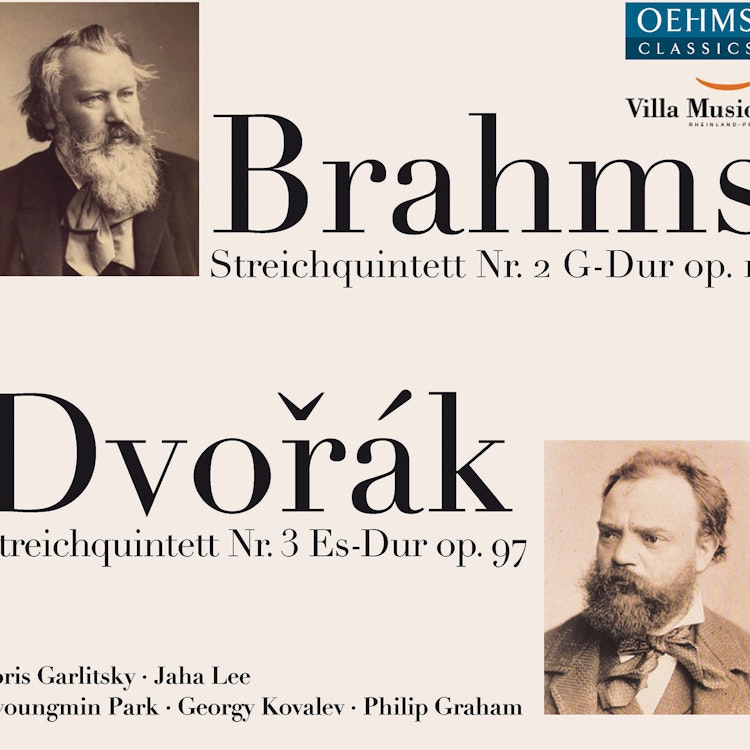
Dvořák's E-flat major Quintet, Op. 97, incorporates 'New World' influences such as Indian drum rhythms, nostalgic pentatonic melodies, and echoes of spirituals.
Composer Biography
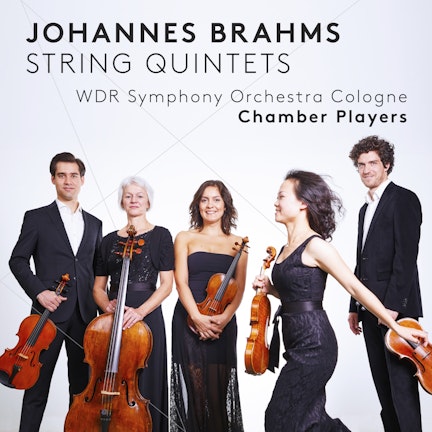
Johannes Brahms, while on holiday in Bad Ischl in 1890, initially considered giving up composing, but then began his Second String Quintet.
Performer Biography
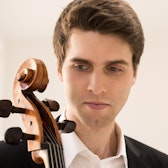
Boris Garlitsky, the violinist on this recording, is a renowned soloist, concertmaster, and professor who won first prize at the Paganini Competition in Italy in 1982.
Recording & Production
The interpretations on this CD were recorded at the Villa Musica Rheinland-Pfalz's Academy for Chamber Music at Engers Castle on the Rhine.
Composition History
Dvořák composed his E-flat major String Quintet in just one month during the summer of 1893 in Spillville, Iowa, inspired by daily walks and Iroquois Indian dances.
Composition History
Brahms's String Quintet No. 2, Op. 111, shares its opus number with Beethoven's last piano sonata, a symbolic gesture by Brahms.
Composer's Artistic Vision
Dvořák consciously integrated 'traits of Indian music' into his E-flat major Quintet, developing these themes with modern rhythmic, harmonic, and contrapuntal techniques.