Brahms: Piano Trio No. 3 in C Minor, Op. 101; Zemlinsky: Piano Trio No. 3 in D Minor, Op. 3
6/18/2021, 7 Tracks, 47:46
Featuring
Christoph Streuli
David Riniker
Adrian Oetiker
Feininger Trio
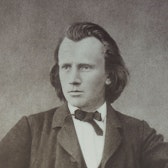
Johannes Brahms
Alexander von Zemlinsky
Did you know?
1/7
Composition History
Johannes Brahms recommended Zemlinsky's clarinet trio to his publisher Simrock, who then suggested marketing it with a violin part instead, leading Zemlinsky to write a new violin part.
Composer's Artistic Vision
The Feininger Trio chose to pair Brahms's trios with those of younger composers like Zemlinsky because these composers built on Brahms's legacy while opening new paths to Modernism and the 20th century.
Composer Biography
Alexander Zemlinsky, a composer featured on this album, knew Johannes Brahms and received support from the older composer, though he was not his pupil.
Composition History
Zemlinsky's Piano Trio Op. 3 was originally written in 1896 as a clarinet trio for a competition that required a work with at least one wind instrument.
Recording & Production
This album is part of the Feininger Trio's Brahms cycle, which combines Brahms's three trios with works by other Viennese composers like Zemlinsky, Korngold, and Krenek.
Compositional Technique
Brahms's Piano Trio in C Minor, Op. 101, is notable for its conciseness, with themes in the outer movements being very succinct and nothing superfluous.
Album & Artwork
The Feininger Trio named themselves after Lyonel Feininger, a painter, graphic artist, and co-founder of The Bauhaus, whose Berlin studio was near the ensemble's rehearsal space.
You might also enjoy...
Shostakovich: Piano Trios Nos. 1 and 2 - Erod: Piano Trio No. 1
Tchaikovsky & Shostakovich: Piano Trios
The Young Richard Strauss
Beethoven in seiner Zeit - Ferdinand Ries Piano Trios
Schumann: Piano Trios Nos. 1 & 2
Dvorák: Piano Trios Nos. 3 & 4 "Dumky"
Saint-Saens, C.: Piano Trios Nos. 1 and 2
Pfitzner & Smetana: Works for Piano Trio
Strauss, R.: Piano Trios Nos. 1 and 2 / Piano Quartet in C Minor
Martucci, Casella & Clementi: Piano Trios
Pixis: Piano Trios
Tchaikovsky: Piano Trio, Op. 50 - Rimsky-Korsakov: Piano Trio: II. Scherzo (Completed M. Steinberg)
Dvorák: Piano Quartets Nos. 1 & 2
Messiaen : Quatuor pour la fin du temps [Quartet for the End of TIme]