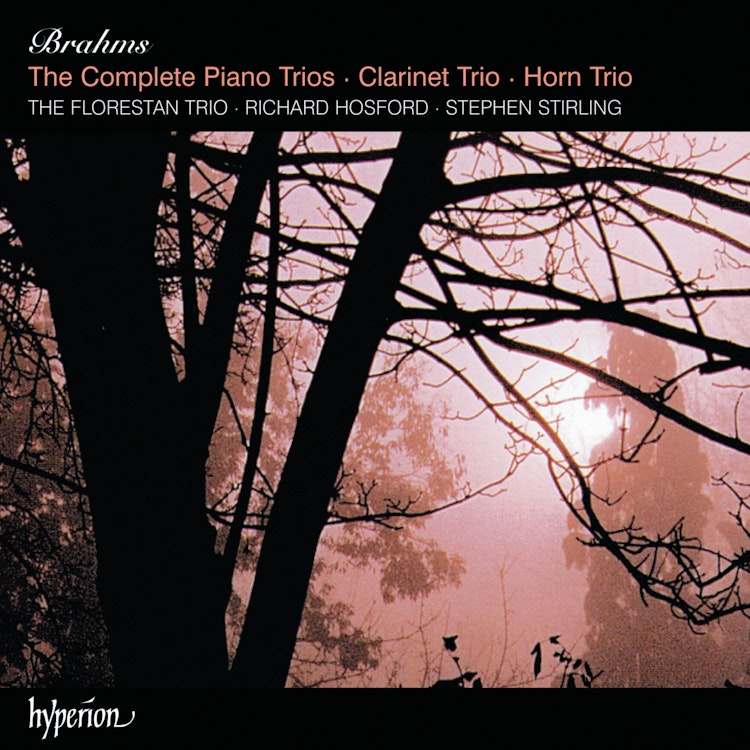
Brahms: Piano Trios 1-3, Clarinet Trio & Horn Trio
7/28/2023, 20 Tracks, 2:16:57
Featuring
Anthony Marwood
Richard Lester
Susan Tomes
Stephen Stirling
Richard Hosford
The Florestan Trio
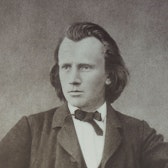
Johannes Brahms
Did you know?
1/7
Composer Biography
Brahms had a lifelong fondness for the horn, having played it in his youth, and preferred the rounded tone of the natural horn (Waldhorn) over valve horns.
Composition History
Brahms destroyed an early Piano Trio in E flat major, despite Clara Schumann's preference for it, before completing his Piano Trio in C major, Op. 87.
Compositional Technique
Brahms's late music, including the A minor Trio, Op. 114, often features chains of descending thirds, which are described as a potent symbol of resignation.
Composer Biography
Johannes Brahms was in his early twenties when he composed his Trio in B major, Op. 8, the first of his conventionally scored piano trios.
Compositional Technique
The Horn Trio, Op. 40, is unique among Brahms's chamber works for not beginning with a sonata-form movement, instead alternating two ideas in rondo fashion.
Composition History
Brahms thoroughly revised his Trio in B major, Op. 8, thirty-five years after its original publication, even telling Clara Schumann that he could now call it Op. 108 instead of Op. 8.
Composition History
The A minor Trio, Op. 114, and Clarinet Quintet in B minor were composed by Brahms in rapid succession in 1891, inspired by the playing of clarinettist Richard Mühlfeld.
You might also enjoy...
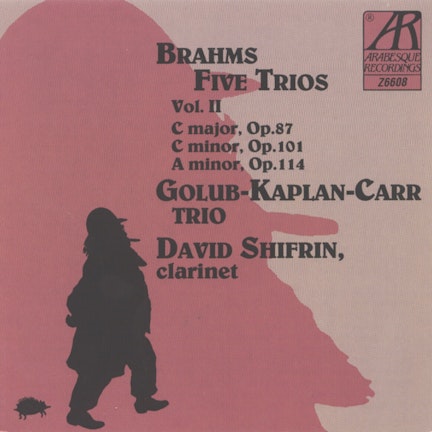
Brahms: Five Trios, Volume II
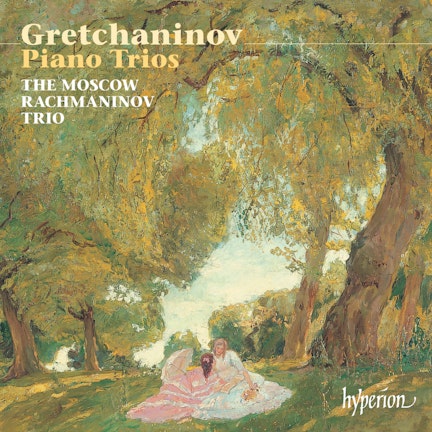
Grechaninov: Piano Trios Nos. 1 & 2; Cello Sonata
Dvorak - Smetana: Piano Trios
Schumann, R.: Piano Trios No. 1, Op. 63 and No. 2, Op. 80
Rachmaninoff: Piano Trios
Schumann: Complete Works for Piano Trio
Piano Trio (Tchaikovsky) / Horn Trio (Brahms)
Vasks, P.: Gramata Cellam / Partita / Episodi E Canto Perpetuo