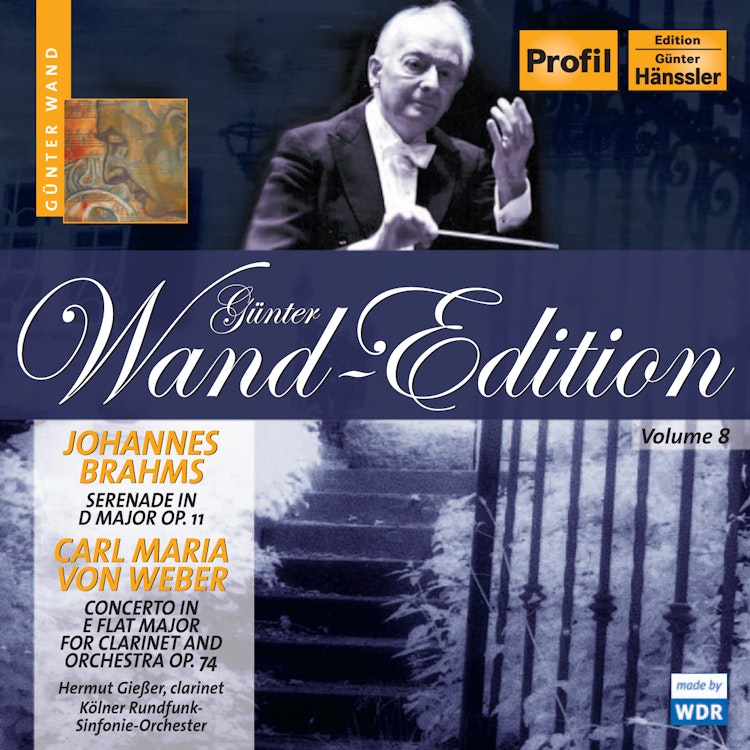
Brahms's Serenade No. 1 in D major, originally a four-movement octet, was later expanded to six movements after he studied Haydn's symphonies and Mozart's serenades.
Composer Biography
Carl Maria von Weber, composer of the Clarinet Concerto, was a cousin of Mozart's wife, Constanze, and had to earn a living as an itinerant musician from a young age.
Composition History
Johannes Brahms worked on his First Symphony for at least fourteen years, struggling to break free from the influence of Beethoven's symphonies.
Composition History
Carl Maria von Weber's Clarinet Concerto in E flat major was written for Heinrich Bärmann, a famous clarinettist of his time, and was a great success at its 1811 Munich premiere.
Interpretation
Conductor Günter Wand preferred to speak of music "representation" rather than "interpretation," believing the latter implied too many possibilities for manipulation.
Historical Context
Günter Wand returned to a completely destroyed Cologne in October 1945 and was tasked with rebuilding operatic and concert life after World War II.
Performer Biography
Günter Wand, the conductor, was known for his adherence to principles, earning him the reputation of being "difficult."
You might also enjoy...
Wegbereiter der Klassik
Hummel, J.N.: Variations in F Major, Op. 102 / Krommer, F.: Clarinet Concerto, Op. 36 / Eybler, J.: Clarinet Concerto in B-Flat Major