The first movement of Brahms' String Sextet No. 2 in G Major weaves in a three-time recurring motif from the notes A-G-A-(D)-H-E, possibly reflecting a sorrowful memory.
Critical Reception
The String Sextet No. 1 in B Flat Major was immediately popular, with Viennese music critic Eduard Hanslick calling it "practically the most beautiful work to have come out of recent chamber music."
Composer Biography
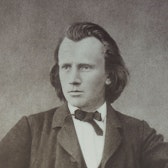
Brahms reflected a personal experience in his String Sextet No. 2 in G Major, stating he had "freed myself from my last love" — Agathe von Siebold, a professor's daughter with whom he had exchanged engagement rings.
Composition History
Brahms' publisher, Friedrich Simrock, initially rejected the String Sextet No. 2 in G Major, despite having readily accepted the earlier String Sextet No. 1.
Interpretation
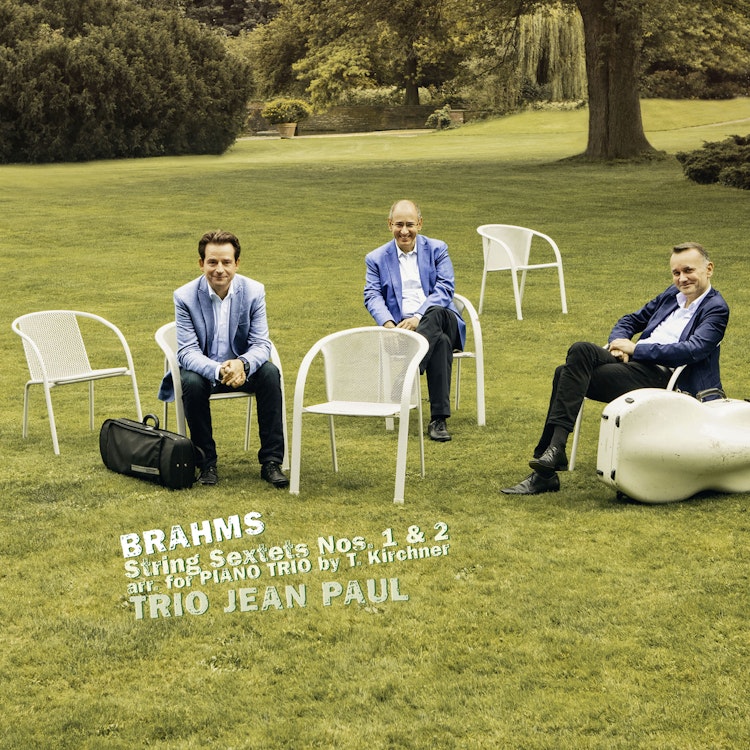
The Trio Jean Paul believes Theodor Kirchner's arrangements for piano trio are not mere adaptations but "thoroughly ingenious elucidations" of Brahms' string sextets, illuminating aspects the original could not.
Composition History
Brahms completed his String Sextet No. 1 in B Flat Major in 1860, after starting it two years earlier, during a summer spent with friends in Bonn.
Composer Biography
Theodor Kirchner, who arranged Brahms' sextets for piano trio, was a respected pianist, organist, teacher, and composer of over 1,000 short piano pieces, despite lifelong financial and health struggles.