Brazilian composers adopted classical musical traditions not as an 'art' form, but as a means of self-expression, often incorporating folk and dance elements.
Historical Context
Brazil boasts a rich and varied musical heritage, with more piano music produced over the past three centuries than virtually any other nation, despite historical isolation and social injustices.
Compositional Technique
Many Brazilian piano pieces are ternary (A-B-A) in structure but lack the lengthy expositions and formal developments typical of European counterparts, giving them a distinct 'Brazilian' character.
Historical Context
The royal Portuguese court's move to Rio de Janeiro in 1808, fleeing Napoleonic invasion, significantly boosted musical life in Brazil and encouraged European composers to immigrate.
Performer Biography
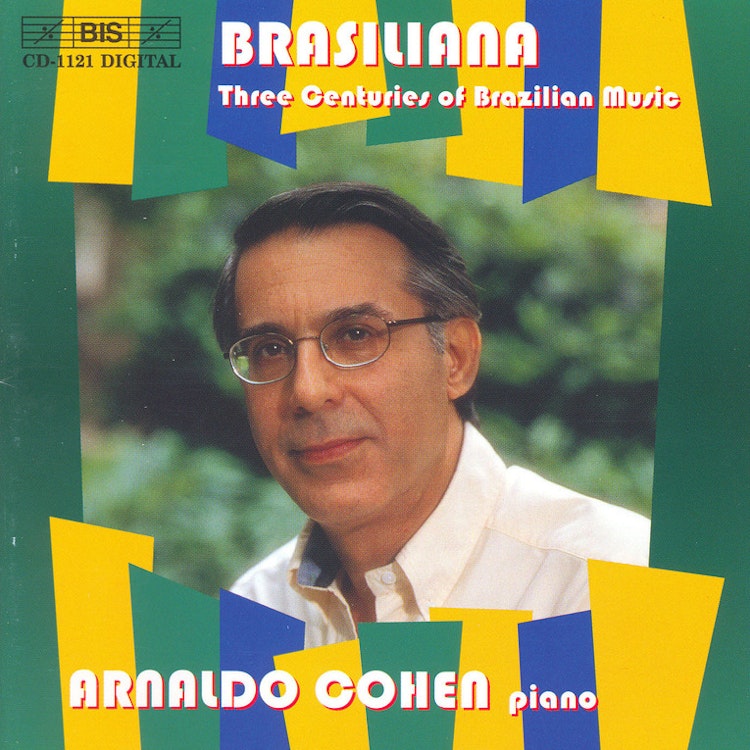
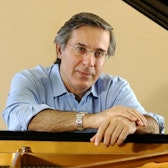
Arnaldo Cohen, the Brazilian-born pianist on this album, replaced Martha Argerich in a concert at the Concertgebouw in Amsterdam, which established him as a prominent figure in the European music world.
Recording & Production
This album was recorded in June 2000 at Nybrokajen 11, the former Academy of Music, in Stockholm, Sweden, using Neumann microphones and a Steinway D grand piano.
Cultural Impact
Brazilian folk and popular music developed a unique identity by blending indigenous songs and dances with African music, brought by slaves mainly from Angola and the Congo, creating a heritage distinct from the rest of the continent.
You might also enjoy...
It's Snowing on My Piano (Streaming Version)
It's Snowing on My Piano
Hamelin: Études
The Sons of the Morning: Piano Music of Vaughn Williams & Gurney