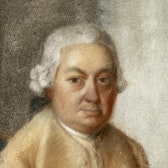
Carl Philipp Emanuel Bach's most personal music embodies Empfindsamkeit, a North German aesthetic movement emphasizing 'heightened sensibility' and the belief that music should 'touch the heart' and 'awaken the passions'.
Composition History
Carl Philipp Emanuel Bach's three cello concertos also exist in versions for harpsichord and flute, and may have originally been conceived as cello concertos.
Instruments
Nicolas Altstaedt performs on a violoncello made by Giulio Cesare Gigli in Rome around 1760.
Historical Context
In 1774, Carl Philipp Emanuel Bach, not Johann Sebastian Bach, was widely considered the "great Bach" and one of the supreme composers of the age.
Performer Biography
Nicolas Altstaedt, the German-French cellist on this recording, was awarded the Credit Suisse Young Artist Award in 2010 and has been artistic director of the Lockenhaus Festival and Haydn Philharmonie.
Compositional Technique
Carl Philipp Emanuel Bach's writing for the cello is highly idiomatic, imaginatively exploiting the instrument's middle and lower registers, and in the A major concerto, featuring wide leaps, rapid string crossings, and eloquent use of the upper register.
Composer Biography
Carl Philipp Emanuel Bach, son of Johann Sebastian Bach, could reportedly play any of his father's keyboard pieces at sight by age eleven.
You might also enjoy...
C.P.E. Bach Cello Concertos
CPE Bach: Cello Concertos
C.P.E. Bach: Cello Concertos
C.P.E. Bach: Cello Concertos
C.P.E. Bach: Cello Concertos
C. P. E. Bach: The Three Cello Concertos
Hasse, C.P.E. Bach & Hertel: Cello Concertos
Bach, C.P.E.: Cello Concertos
Cello Recital: Starker, Janos - Bach, C.P.E. Boccherini, L. / Vivaldi, A. Janson, J.-B.-A.-J. / Couperin, F. (Concerto Collection)
C.P.E. Bach: Cello Concertos
CELLO HEROICS II — Shostakovitch Cello Concerto No.1 Op.107 in E-flat Major