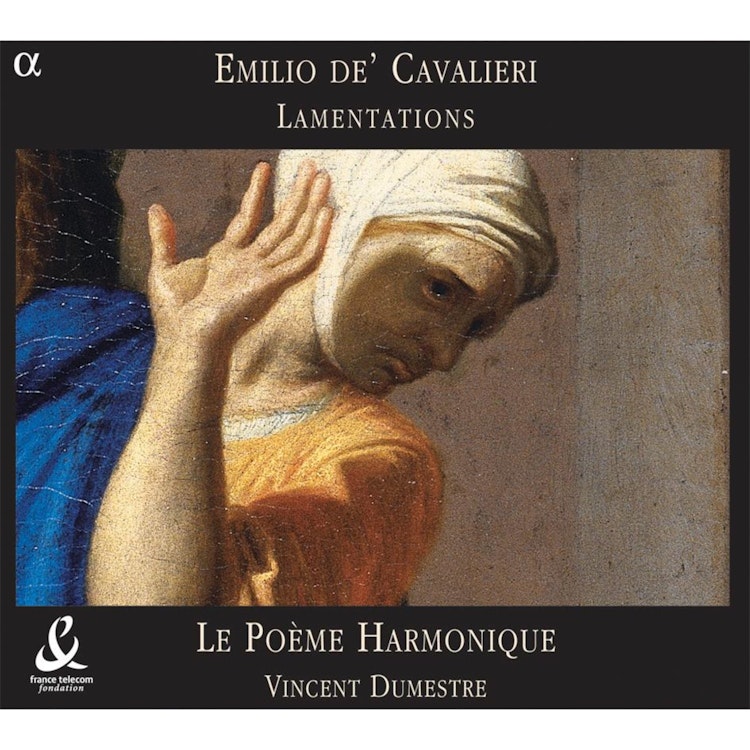
Cavalieri, a true 'nobile gentiluomo', had eclectic interests, collecting art, designing instruments like enharmonic and hydraulic organs, and even supervising a crystal factory.
Composer Biography
Cavalieri served as Intendant des Arts at the Florentine court, enjoying a high salary and large residence, which led to animosity with his predecessor, Count Bardi.
Interpretation
The performers on this recording used examples of diminution by F. Severi and G. D. Della Viola to improvise embellishments for the Miserere, adhering to Roman musical practice.
Compositional Technique
The Lamentations of Jeremiah by Cavalieri are considered the first Baroque Tenebrae Lessons, dramatically combining Renaissance aesthetics with the emerging monodic style.
Historical Context
The late 16th century saw a shift from a worldview where the divine was immanent in all things to one where God's presence needed to be 'represented' supernaturally, giving rise to the Baroque artistic movement.
Composition History
Cavalieri's Lamentations of Jeremiah are notable for containing the first recitatives in sacred music history, blending the 'stile antico' (traditional Roman polyphony) with the 'stile nuovo' (monodic recitative).
Composer Biography
Emilio de' Cavalieri, born in Rome around 1550, began his career as a composer and music organizer, coordinating Lenten music and managing artistic finances.