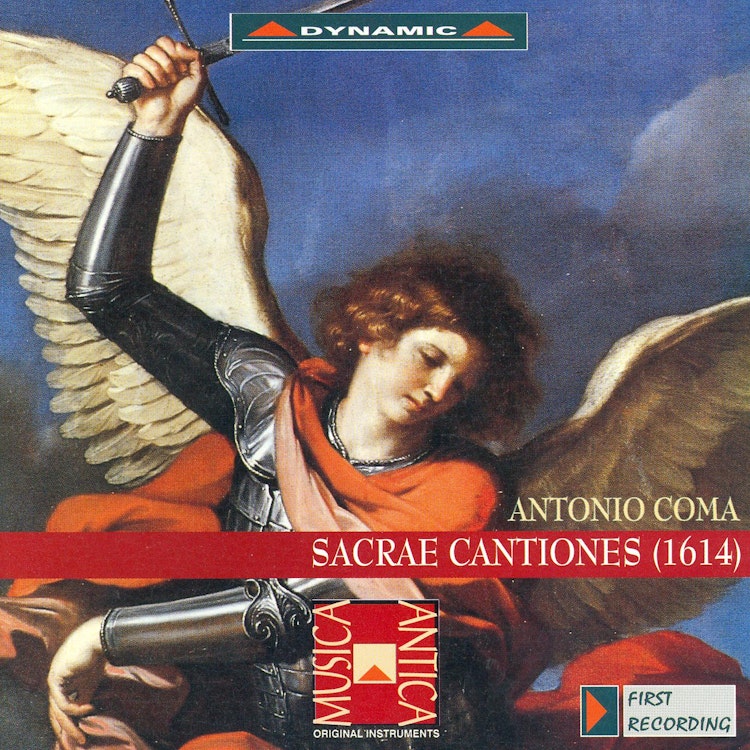
Antonio Coma's Sacrae Cantiones, featured on this album, were published in Bologna in 1614 and dedicated to the Community of Cento, which rewarded him with ten scudos.
Composer Biography
Antonio Coma (or Comi), the composer of these Sacrae Cantiones, was born in Cento, Italy, in 1560 and served as the first maestro di cappella at S. Biagio from 1589 until his death in 1629.
Composer Biography
Before becoming a maestro di cappella, Antonio Coma worked in a non-musical profession as a land surveyor and book-keeper.
Composer's Artistic Vision
Antonio Coma's Sacrae Cantiones avoid excessive virtuosity, favoring a declamatory and severe tone with passages that are easy to sing and natural to listen to.
Compositional Technique
The album includes two instrumental pieces, La Piombina and La Bianca, which are similar to canzoni da sonar and were likely dedicated to important Cento families.
Compositional Technique
The Sacrae Cantiones by Antonio Coma are stylistically influenced by Ludovico da Viadana's Concerti ecclesiastici, featuring one to four voices with basso continuo.
You might also enjoy...
Cavalieri: Rappresentatione di Anima et di Corpo
Valente: Intavolatura de cimbalo
La Pellegrina - Musik zur Medici-Hochzeit 1589 [Remastered]