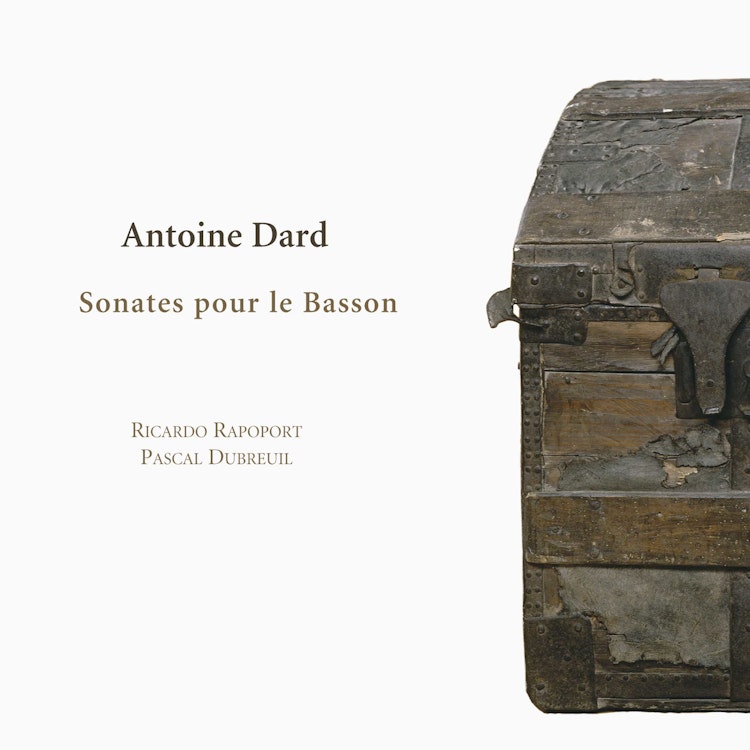
Dard's Six Sonatas for bassoon, despite being designated "Opus 2," were his first printed works, published in 1759 just before he entered the king's service.
Interpretation
This recording uses only harpsichord for the continuo, without the usual cello, to allow for more freedom and transparency in interpretation.
Compositional Technique
Antoine Dard's bassoon sonatas utilize the instrument's very high register, a technique not commonly employed by other composers of his time.
Composer Biography
Antoine Dard was appointed as the 5th bassoonist in the prestigious orchestra of the Royal Academy of Music in 1760, and three years later became section leader.
Critical Reception
Upon their publication in 1759, Dard's bassoon sonatas were advertised as "unique amongst their kind" and also suitable for the violoncello.
Composer Biography
Antoine Dard, the composer, was born in 1715 in Chapaize, France, and was part of the leading musical institutions of the French monarchy.
Compositional Technique
The sonatas are notable for their unusually detailed articulation marks for each note and written-out decorations, which was rare for the period.
You might also enjoy...
The realms of keyboard music vol. 8 - BACH meets Silbermann fortepiano