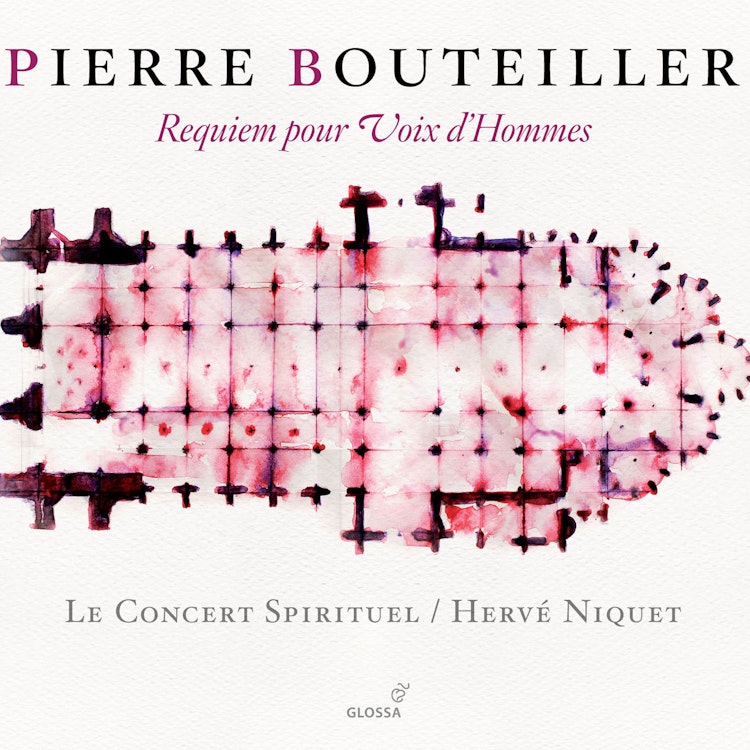
The five-part writing of Bouteiller's Missa pro defunctis is distinctively French, similar to works performed in the Chapelle Royale, and a conception not found in Italy or Germany.
Interpretation
The conductor, Hervé Niquet, 'composes' the service in the manner of a Baroque maître de chapelle, using available resources and his knowledge of the religious tradition.
Composition History
Pierre Bouteiller composed two Te Deums, now lost, for special occasions, including the birth of the Duke of Brittany (grandson of Louis XIV) in 1704 and to celebrate the Treaty of Ryswick in 1697.
Historical Context
The works of Pierre Bouteiller might be unknown today without the efforts of Sébastien de Brossard (1655-1730), a theorist and collector who compiled a significant body of printed and manuscript music.
Recording & Production
This album was recorded in the Église de Notre Dame du Liban, Paris, in February 2010.
Composer Biography
Pierre Bouteiller (c.1655-c.1717), whose Missa pro defunctis is featured, was a maître de chapelle in Troyes and Châlons-sur-Marne before moving to Paris as a 'maître joueur of the viol and other instruments'.
Composer Biography
Sébastien de Brossard (1655-1730) was the first to publish a musical dictionary in the French language in 1703.
You might also enjoy...
Flores españolas: Music for Viola Consort & Guitar
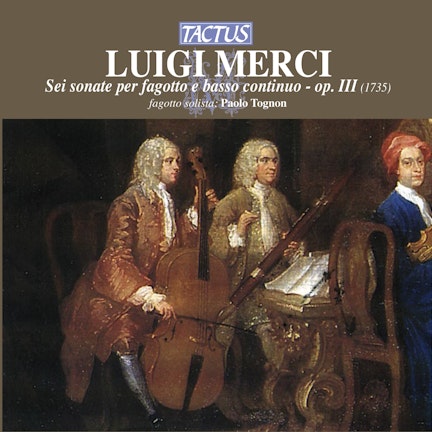
Merci: Sei sonate per fagotto e basso continuo, Op. 3
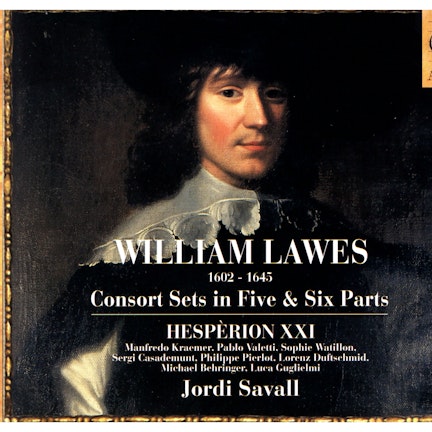
William Lawes: Consort Sets In Five & Six Parts
Peregrinare nei suoni gravi e soavi
Bach: Wo soll ich fliehen hin
Paisible: 6 Setts of Aires
Charpentier, Couperin & Moulinié: Le Concert des Violes
Circa 1700: Purcell & his Generation
Æternum: Music of the Elizabethan Avant Garde from Add. MS 31390
The Italian Ground
On a Cold Winter's Day - Early Christmas Music and Carols from the British Isles