Debussy agreed with the poet Mallarmé's idea that "Naming an object removes three quarters of one's enjoyment of a poem… hinting at it, that's the dream."
Historical Context
The second piece of En blanc et noir is dedicated to Lieutenant Jacques Charlot, a relative of Debussy's publisher, who was killed in action in 1915 during World War I.
Composition History
The titles for Debussy's Préludes are printed at the end of each piece, preceded by an ellipse, to be read in the silence after the final notes, adding mystery rather than being programmatic.
Compositional Technique
Debussy's Préludes are notable for their radical piano writing, new keyboard soundworlds, and formal freedom, reinventing time in disjointed and unpredictable ways.
Composer's Artistic Vision
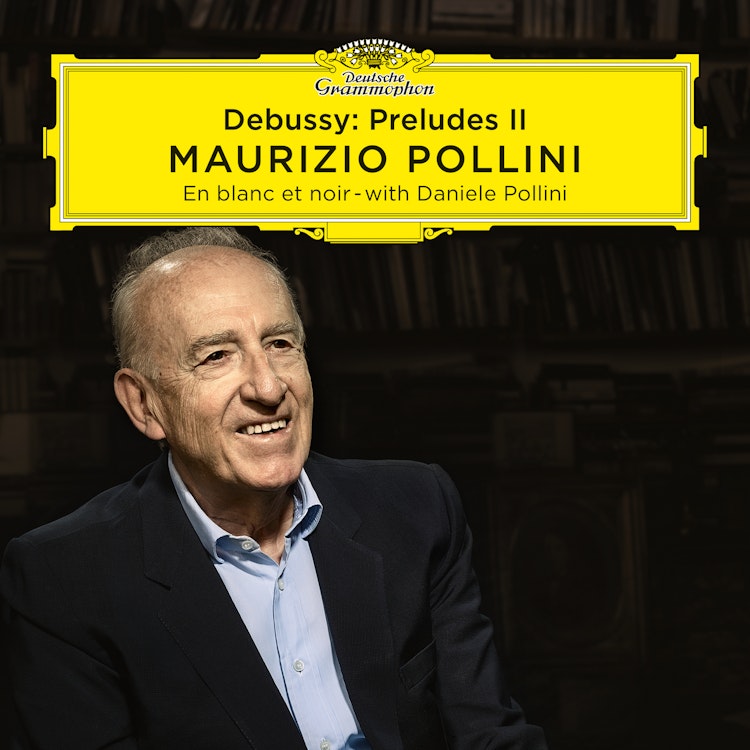
The title En blanc et noir refers to the black and white keys of the piano, with Debussy stating that these pieces should draw their emotion purely from the piano, like the "greys" of Velázquez.
Composition History
Debussy wrote En blanc et noir, a set of three pieces for two pianos, during a period of creative inspiration in 1915, after suffering from a "long drought" due to the war.
Compositional Technique
In the second piece of En blanc et noir, Debussy uses the Lutheran chorale "Ein feste Burg ist unser Gott" to symbolize the German enemy, which he described as "what lies in wait for Luther's hymn when it dares stray into a French 'Caprice'."
You might also enjoy...
Debussy, C.: 12 Etudes / Estampes
Debussy: Études, L. 136 & Children's Corner, L. 113
Debussy: Complete Works for Piano, Vol. 4
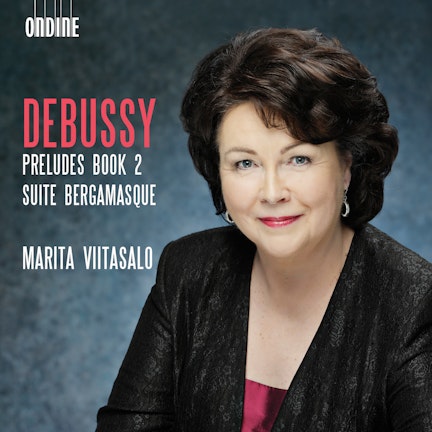
Debussy: Préludes, Book 2, L. 123 & Suite bergamasque, L. 75
Debussy: 12 Preludes, Book I; Suite Bergamasque
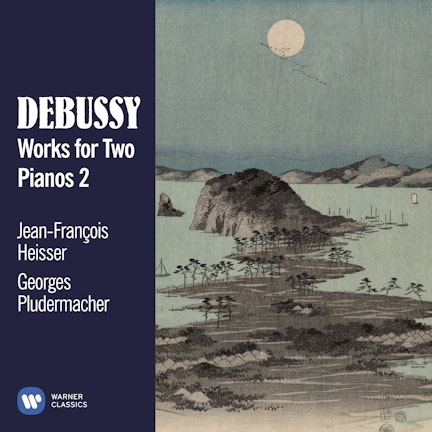
Debussy: Works for Two Pianos, Vol. 2
Claude Debussy: Préludes
Véronique Bonnecaze: Debussy
Debussy que J'Aime
Debussy: Préludes Book 1; Children's Corner
Debussy: Works for Piano
Bedtime Debussy
Debussy: L'isle joyeuse, Images Book I, Etudes Book II & Estampes