Alexander Scriabin's Piano Sonata No. 5 is notable for being a single-movement work, the last to use a key signature, the first without metronome markings, and features frequent time signature changes including 5/8 bars.
Compositional Technique
Enescu's Suite No. 2 incorporates Romanian folk elements, such as the 'doina' (a lyrical, improvised form of melismatic singing) in the Pavane and the 'sârba' dance rhythm in the Bourrée.
Critical Reception
Schubert's Sonata in G major, D 894, was criticized during his lifetime for its many repetitions, though Robert Schumann later praised it as "the most perfect in form and spirit."
Composer's Artistic Vision
Scriabin prefaced his Piano Sonata No. 5 with a philosophical program, calling upon "mysterious forces" and bringing "audacity" to the "timid shadows of life."
Composition History
Franz Schubert's Sonata in G major, D 894, was published by Tobias Haslinger as four separate movements (Fantasie, Andante, Menuetto, Allegretto) for commercial reasons, rather than as one large work.
Performer Biography
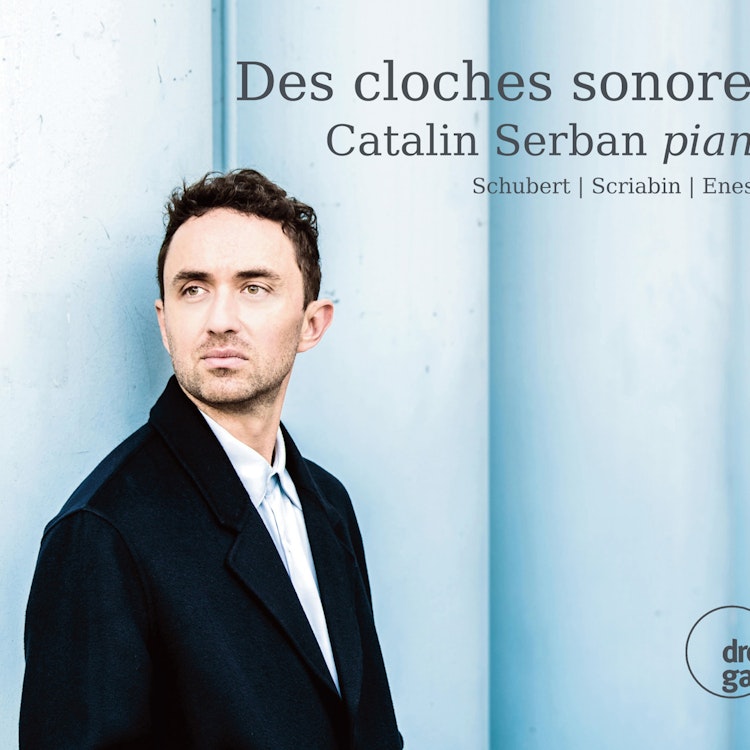
Catalin Serban, the Romanian pianist on this recording, began his musical education at age six and has won several first prizes at piano competitions in Romania and international awards.
Composer Biography
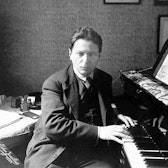
George Enescu, a Romanian composer, wrote his second piano suite at age 22 as a commission for a competition organized by the Parisian magazine Musica.