Josquin des Prez had a tendency to impose certain constraints on his compositions, and his Missa D'ung aultre amer may have been an experiment in what kind of music could be created using a cantus firmus in a pure form.
Compositional Technique
Josquin des Prez's Missa Mater patris is unusual for its time, with nearly one-third of the work consisting of homophonic chord blocks, a rare feature in the polyphonic Renaissance era.
Historical Context
The rondeau 'D'ung aultre amer' by Johannes Ockeghem, which Josquin used for his Missa D'ung aultre amer, was a 15th-century 'top hit' chanson, widely circulated and arranged.
Composition History
Josquin's Missa Mater patris is a 'parody mass' based on a motet by Antoine Brumel, a contemporary French composer, extending its elements into a larger four-voice framework.
Interpretation
Vocal ensemble Cappella, founded in 1997, aims to revive the true essence of Renaissance Flemish sacred music by recreating historical performance practices, including singing around a choir book and focusing on appropriate pronunciation and vocalization.
Compositional Technique
The unusual harmonies in Josquin's Missa Mater patris are based on 'fauxbourdon,' a 15th-century improvisational technique where parallel melodies are sung at intervals of a fourth and sixth below a Gregorian chant.
Composition History
Some scholars believe Josquin's Missa Mater patris was composed as a lament for Antoine Brumel, a great composer who died around 1512, given its publication shortly after his death and its solemn character.
You might also enjoy...
Taverner: Tudor Church Music; Croft: Burial Service
Christmas Music from Medieval and Renaissance Europe
The Magic of Polyphony
Magnificat
Taverner: Western Wynde Mass & Other Sacred Music
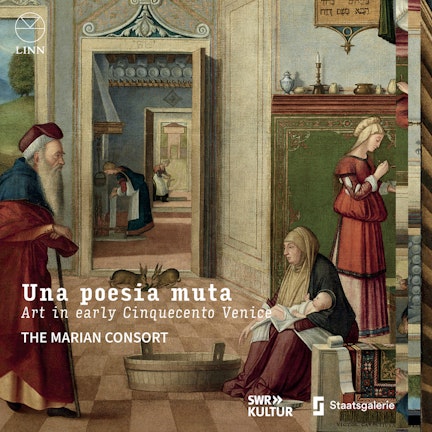
Una poesia muta. Art in Early Cinquecento Venice
Guerrero: Missa De la batalla escoutez & Other Works
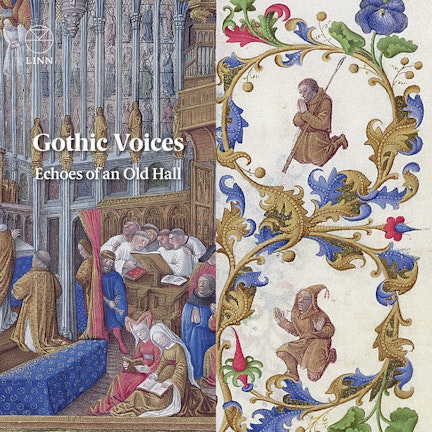
Echoes of an Old Hall
Renaissance & Baroque Music
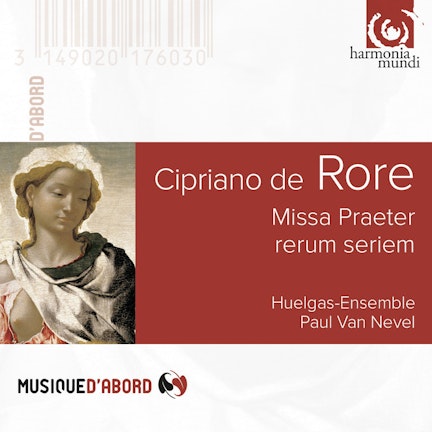
De Rore: Missa Praeter rerum seriem
Queen of Hearts: Laments and Songs of Regret for Queens Terrestrial and Celestial
The Rose and The Ostrich Feather: Eton Choirbook Volume I
Christmas Presence: The King's Singers – Live from Kings College Chapel, Cambridge