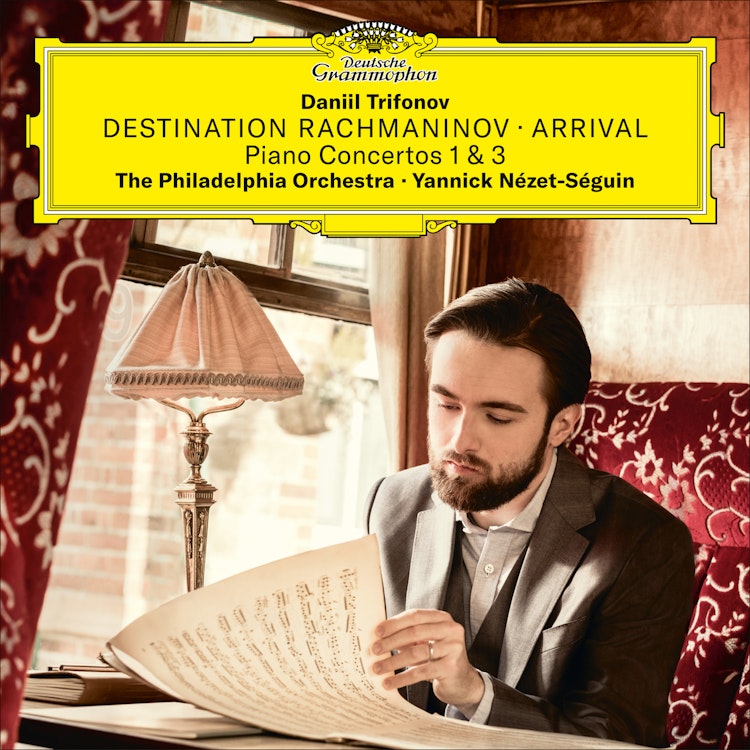
The second part of star pianist Daniil Trifonov's Rachmaninoff series features the First and Third Concertos, alongside two transcriptions of Rachmaninoff works by Trifonov himself. The First Concerto is a youthful work, written at the age of just 18, yet remained the composer’s favourite of his concertos to perform. The Third is a huge, virtuosic and richly lyrical work of enduring popularity. Yannick Nézet-Séguin conducts The Philadelphia Orchestra, an ensemble that has long been closely associated with Rachmaninoff.
Featuring
Daniil Trifonov
Yannick Nézet-Séguin
The Philadelphia Orchestra
Sergei Rachmaninoff
Did you know?
1/7
Composition History
Rachmaninov's Third Piano Concerto, composed in 1909, is described as profoundly Russian in character and quintessentially Rachmaninov in expression.
Composition History
Rachmaninov's First Piano Concerto, composed in 1891, captures a moment of rare happiness in the life of the then 18-year-old composer.
Compositional Technique
Daniil Trifonov believes Rachmaninov's Third Piano Concerto is perhaps the most substantial undertaking in piano literature due to its technical, psychological, and emotional complexity.
Composer Biography
Rachmaninov's First Concerto was his own favorite to perform among his concertos, and he returned to it throughout his life, even when his other concertos were more popular.
Performer Biography
The Philadelphia Orchestra, performing on this album, has a strong connection to Rachmaninov, having premiered his Fourth Piano Concerto and Rhapsody on a Theme of Paganini with the composer at the piano.
Composer's Artistic Vision
Sergei Rachmaninov, like Daniil Trifonov, identified bells as the iconic aural motif of Russian identity, lending his music a unique nobility and nostalgic character.
Compositional Technique
The First Piano Concerto is based in character and form on the Piano Concerto by Edvard Grieg, a work Rachmaninov admired.
You might also enjoy...
Rachmaninov: Piano Concerto No. 4 - Chopin, Beethoven
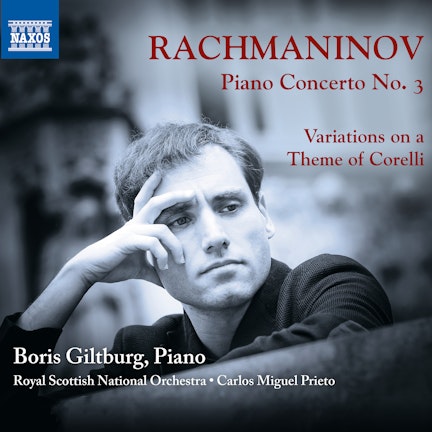
Rachmaninoff: Piano Concerto No. 3 - Variations on a Theme of Corelli
Rachmaninov: Piano Concerto No. 2, Op. 18 & Variations on a Theme of Corelli, Op. 42
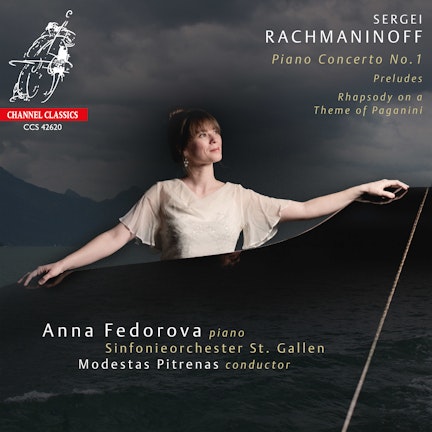
Anna Fedorova: Rachmaninoff Piano Concerto No. 1
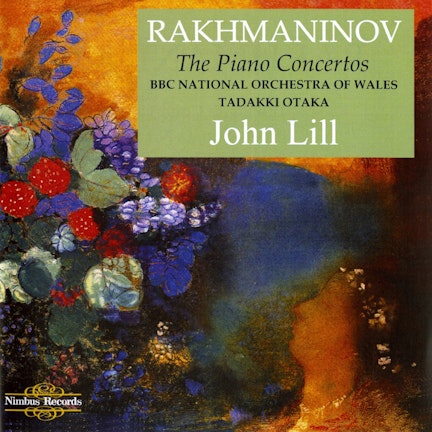
Rachmaninov: The Piano Concertos
Rachmaninov
Rachmaninov, S.: Piano Concerto No. 4 / Variations On A Theme of Corelli / Rhapsody On A Theme of Paganini
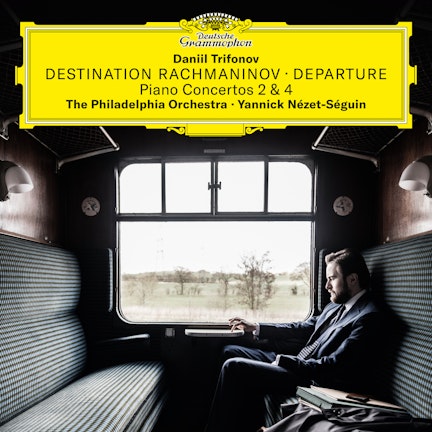
Destination Rachmaninov: Departure
Favourite Rachmaninov
Rachmaninov: Piano Concertos 2 & 3 - Rhapsody on a Theme of Paganini
Everybody's Rachmaninoff: Piano Concertos Nos. 2 & 3, Rhapsody on a Theme of Paganini, Piano Sonata No. 2 and Vocalise
Rachmaninoff: Piano Concerto No. 3 in D Minor, Op. 30