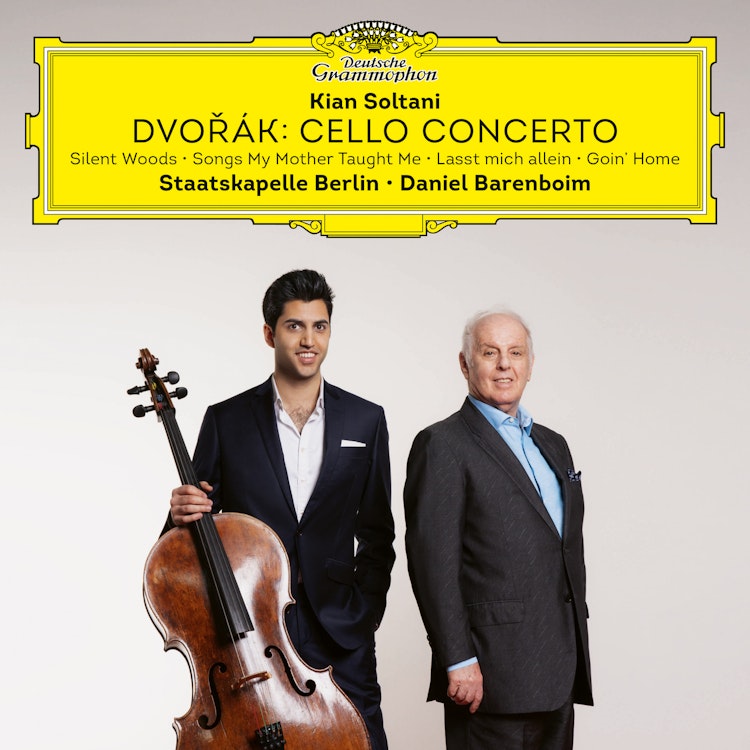
Daniel Barenboim has long been championing and performing with the cellist Kian Soltani, and here the two collaborate on the Dvořák Cello Concerto with the Staatskapelle Berlin. Six cellists from that orchestra then join Soltani for a selection of Dvořák miniatures, three of them arranged by Soltani himself. BBC Music Magazine Choice
Featuring
Kian Soltani
Daniel Barenboim
Otto Tolonen
Staatskapelle Berlin
Antonín Dvořák
Did you know?
1/7
Composition History
After Josefína Kaunitzová's death, Dvořák reworked the end of the Cello Concerto's final movement into a Requiem for her, where the solo violin again quotes her favorite song.
Recording & Production
This album includes both a live recording of Dvořák's Cello Concerto from the Berlin Philharmonie and studio recordings of cello ensemble arrangements from the Siemens Villa in Berlin.
Compositional Technique
Dvořák quoted Josefína Kaunitzová's favorite song, 'Lasst mich allein' (Leave me alone) from his Four Lieder op. 82, in the middle section of the Cello Concerto's slow second movement.
Composition History
Dvořák wrote his Cello Concerto while in America, and its second and third movements reflect a sense of yearning that can be interpreted as homesickness.
Compositional Technique
Dvořák described the ending of his Cello Concerto as closing 'gradually diminuendo like a sigh - with reminiscences from the first and second movements - the solo dies down to pp and then swells again, and the last bars are taken up by the orchestra before it finishes in stormy mood.'
Performer Biography
Daniel Barenboim, the conductor on this album, has been the General Music Director of the Staatskapelle Berlin since 1992 and was elected Conductor for Life by the orchestra in 2000.
Composition History
While working on the Adagio of his Cello Concerto, Dvořák learned that his sister-in-law Josefína Kaunitzová, the secret love of his life, was gravely ill.
You might also enjoy...
Strauss: Metamorphosen & Symphony for Wind Instruments
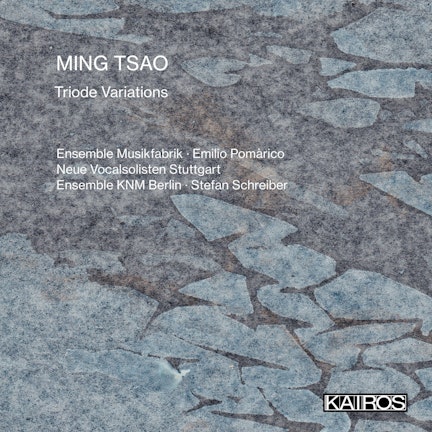
Ming Tsao: Triode Variations
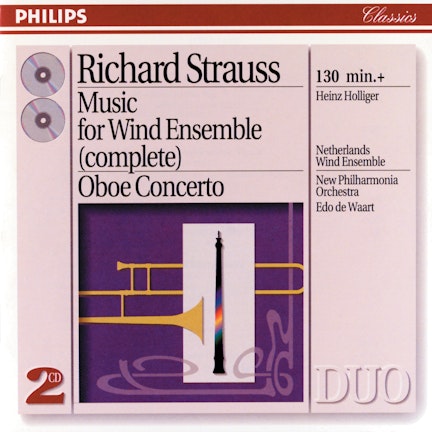
Richard Strauss : Music for Wind Instruments
Strauss, R.: Serenade for Wind Instruments;Oboe Concerto