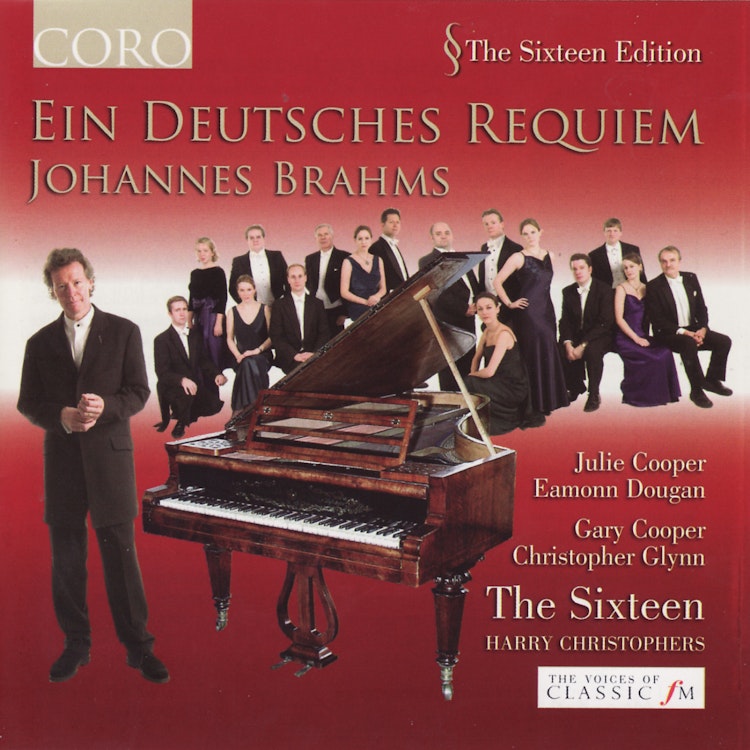
This recording of Brahms's German Requiem uses an 1872 Bösendorfer piano, allowing listeners to experience a sound similar to what Brahms would have heard.
Performer Biography
The Sixteen, the vocal ensemble on this recording, has won numerous awards, including a Grand Prix du Disque for Handel's Messiah and a Classical Brit Award for 'Renaissance'.
Composer's Artistic Vision
Brahms's German Requiem focuses more on comforting the living than advocating for the dead, a departure from traditional requiems.
Composition History
The 'London' version of Brahms's German Requiem, arranged for piano duet by Brahms himself, was created to promote the work outside his native Germany.
Historical Context
Brahms's piano arrangement of the Requiem facilitated its international transmission and performance, especially in places where orchestral forces were not readily available.
Composition History
Brahms's German Requiem was influenced by the Protestant church music of Heinrich Schütz, a great German master of the early Baroque.
Compositional Technique
Brahms's piano arrangement of the Requiem is not a simple reduction; he made adjustments to highlight the piano's unique color.
You might also enjoy...
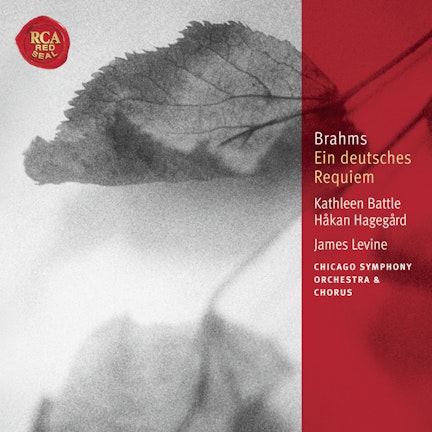
Brahms: Ein deutsches Requiem: Classic Library Series