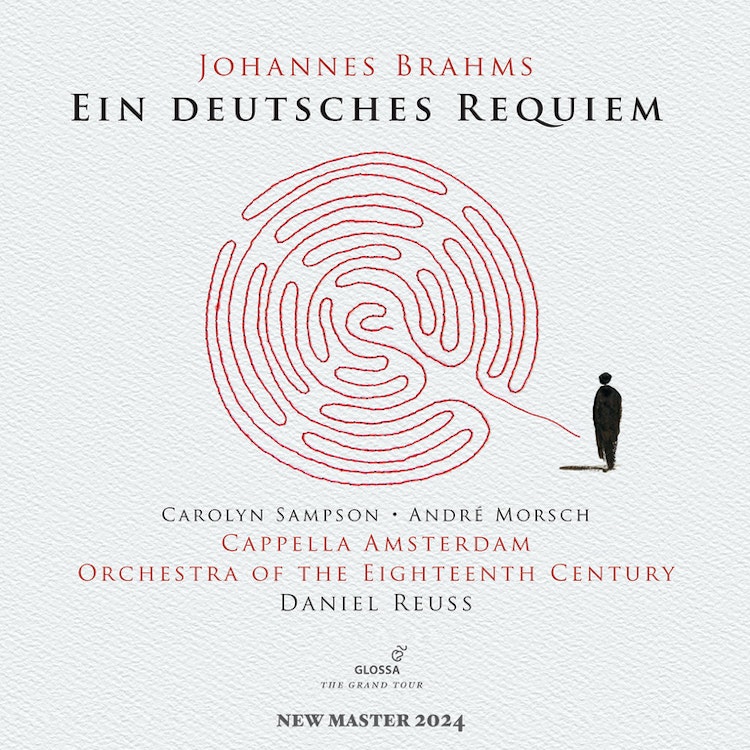
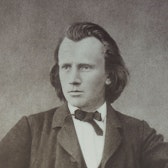
The 19th-century Viennese critic Eduard Hanslick praised Brahms's A German Requiem as a work of "unbelievable importance and great mastery," comparing it to sacred music by Mozart and Beethoven.
Composer's Artistic Vision
Brahms preferred to call his work "A Requiem for humanity" rather than "A German Requiem," aiming for a message of hope that transcended religious boundaries.
Compositional Technique
Brahms used symbolic orchestral colors in A German Requiem, such as omitting violins in the first movement for a dark sound and reserving harp arpeggios for moments of serenity and the word "blessed."
Composition History
For its 1868 premiere in Bremen, the church board insisted on inserting an aria from Handel's Messiah due to the Requiem's lack of mention of Christ's crucifixion, an intervention that inspired Brahms to add his fifth movement.
Compositional Technique
Unlike traditional Latin Requiems, Brahms's A German Requiem avoids the "horrid imagery of the last judgement" and instead focuses on comforting the living and helping them accept death.
Composition History
Brahms began conceiving his Requiem around the time of his friend Robert Schumann's death in 1856, but the death of his own mother in 1865 ultimately prompted him to set it to music.
Notable Performances
The premiere of the first three movements of A German Requiem in Catholic Vienna in 1867 was met with "cries and hissing" due to concerns about the work's length and the composer's "weighty North-German" style.