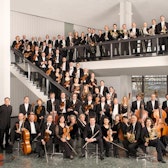
Deutsche Radio Philharmonie Saarbrücken Kaiserslautern
NDR Chor
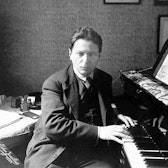
George Enescu
Did you know?
1/7
Composer Biography
George Enescu, a Romanian composer, was called "the most astonishing musical phenomenon since Mozart" by Pablo Casals and "the greatest musician" by his pupil Yehudi Menuhin.
Composition History
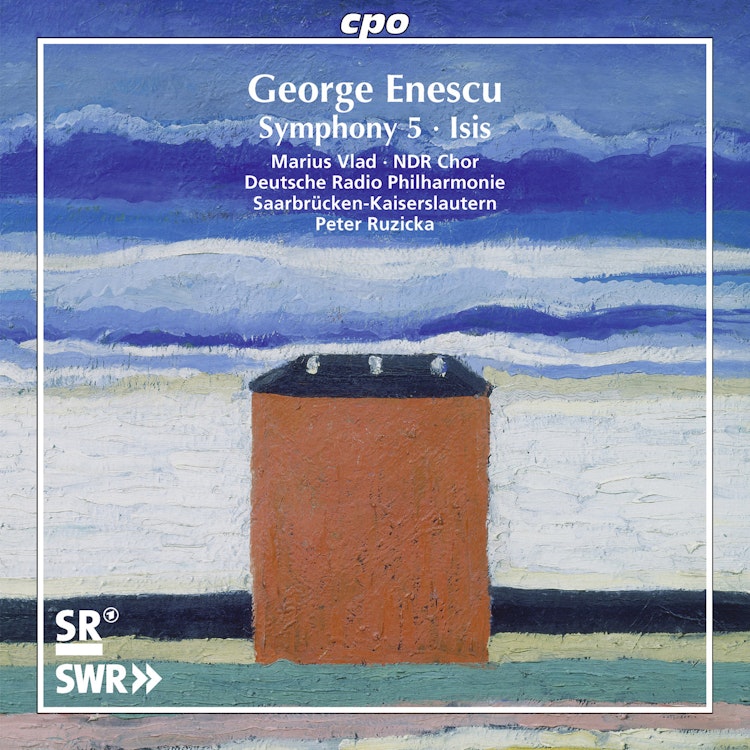
The Romanian composer and musicologist Pascal Bentoiu discovered Enescu's composition Isis in a Bucharest archive in 1996, and he also rendered it and Enescu's last two symphonies into playable form.
Performer Biography
Marius Vlad, one of Romania's best tenors, has performed in major opera houses and philharmonic halls across Europe and Japan, and teaches voice at the Cluj-Napoca Music Academy.
Composer's Artistic Vision
Enescu's music combines deep roots in Romanian tradition with influences from German and French traditions, creating a unique compositional idiom.
Composer Biography
Enescu was a versatile musician, famous as a conductor in the US and a violin virtuoso in Europe, but he primarily viewed himself as a composer, also excelling as a pianist and teacher.
Composition History
Many of Enescu's important compositions, including Symphonies Nos. 4 and 5 and the vocal symphonic poem Isis, were only sketched and not fully completed by him.
Compositional Technique
Enescu's music is characterized by a free musical rhetoric that resists traditional temporal processes, with ideas constantly varied and developed rather than repeated.
You might also enjoy...
Vianna da Motta: Symphony a Patria - Dona Ines de Castro Overture