Weinberg settled in Moscow in 1943 after his First Symphony impressed Shostakovich, and remained there for the rest of his life.
Composition History
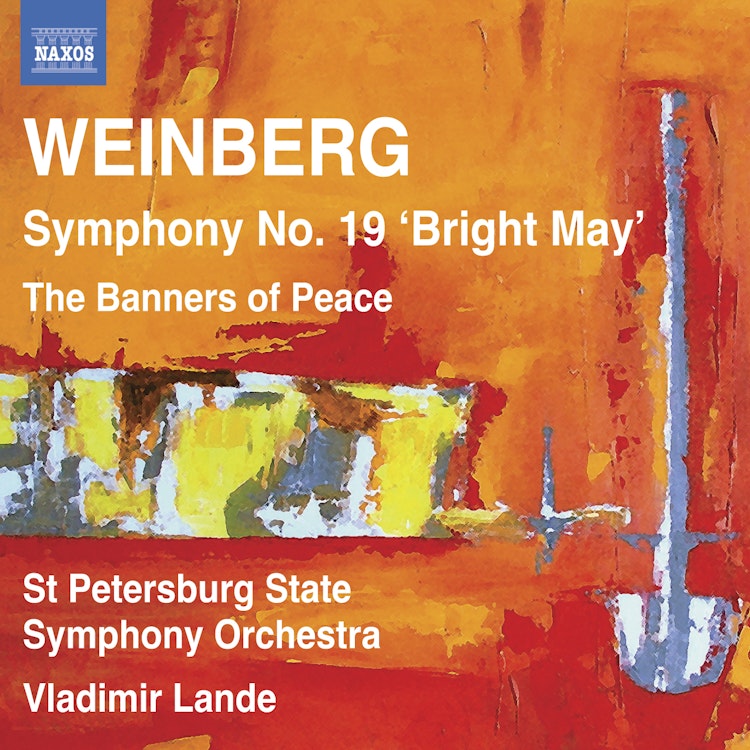
The Banners of Peace, a 'festive poem' by Weinberg, was written immediately after the Nineteenth Symphony and dedicated to the 27th Congress of the Soviet Communist Party.
Composer's Artistic Vision
Weinberg's Symphony No. 19, 'Bright May', views May as the month the 'Great Patriotic War' ended, expressing both apprehension and celebration.
Composer Biography
Despite personal setbacks, including the execution of his father-in-law and his own brief imprisonment, Weinberg gained a reputation as a composer championed by leading Soviet musicians.
Composer Biography
Mieczysław Weinberg, a highly regarded pianist, fled Warsaw during the Nazi occupation and was officially known as Moisey Vainberg until 1982.
Performer Biography
Vladimir Lande, the conductor on this album, is the Principal Guest Conductor of the St Petersburg State Symphony Orchestra and also maintains a career as an oboist with the Poulenc Trio.
Critical Reception
Weinberg's output, which includes 26 symphonies and 17 string quartets, has received increasing recognition since his death in 1996, despite his fortunes declining in his final decades.
You might also enjoy...
Casella: Symphony No. 3 - Elegia eroica
Bax: Symphony No. 2 / November Woods
Bax: Symphony No. 2 / November Woods
Freitas Branco: Symphony No. 4 - Vathek
Atterberg: Sinfonia Visionaria - Alven (The River)
Zemlinsky: Seejungfrau (Die) / Symphony in D Minor