Fauré: Piano Trio - Schubert: Notturno in E-Flat - Brahms: Piano Trio No. 1 in B-Flat
9/25/2020, 8 Tracks, 1:07:48
Featuring
Pablo Hernán Benedí
Michael Petrov
Erdem Misirlioğlu
Trio Isimsiz
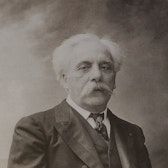
Gabriel Fauré
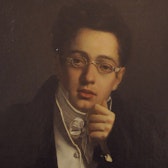
Franz Schubert
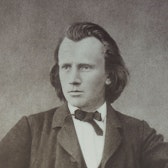
Johannes Brahms
Did you know?
1/7
Composer's Artistic Vision
Composer Albert Roussel described Fauré's mature musical language as pointing "the way towards marvellous musical horizons overflowing with freshness and light," without noise or fuss.
Composition History
Fauré's only Piano Trio, Op. 120, was composed in 1922-23, shortly before his death, with the central movement written at his favorite resort Annecy-le-Vieux.
Composition History
Brahms composed his Piano Trio No.1 Op.8 in January 1854 when he was only 20, and it is notable for being his only composition existing in two distinct published versions.
Composition History
Schubert's Adagio in E flat major for piano trio, D897, known as 'Notturno' (a title added by the publisher in 1845), may have originally been intended as the slow movement for his Piano Trio in B flat major.
Notable Performances
The premiere of Fauré's Piano Trio was given in May 1923 to celebrate his 75th birthday, and a month later it was performed by the renowned trio of Cortot, Thibaud, and Casals.
Recording & Production
The Borletti-Buitoni Trust (BBT) supports both young musicians and charitable organizations that use music to help the underprivileged, providing assistance and encouragement.
Compositional Technique
Brahms's Piano Trio No.1 Op.8 is unusual for beginning in a major key (B major) and ending in the tonic minor, a rare feature for an extended work.
You might also enjoy...
Brahms: Piano Trios 1-3, Clarinet Trio & Horn Trio
Czerny: Chamber Works
Brahms: The Complete Piano Trios
Brahms, J.: Piano Trio No. 1 / Dvorak, A.: Piano Trio No. 4, "Dumky" (The Rembrandt Trio)
Brahms & Dvorak: Piano Trios
Brahms, Dvořák & Mendelssohn: Piano Trios
Wolf-Ferrari: Chamber Music
Brahms: Piano Trios
Vox balaenae: Trios for Flute, Cello & Piano
Moto eterno
Schumann: Piano Quartet; Piano Trio No. 3; Fantasiestücke, Op. 88
Dvorak - Smetana: Piano Trios
Turina: Piano Trios Nos. 1 and 2 - Martinů: Bergerettes (Philadelphia Trio)