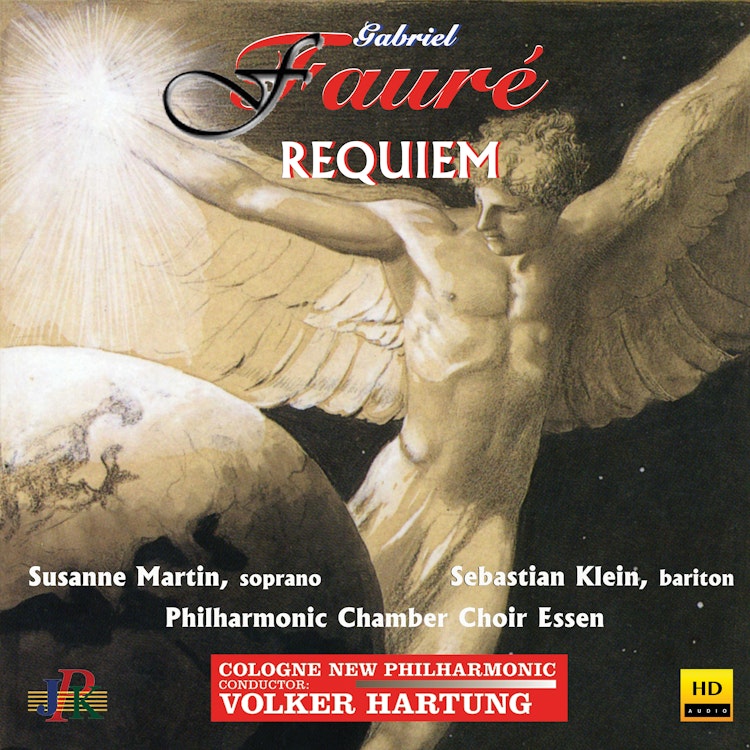
Fauré's Requiem features smaller ensembles and slimmer orchestrations, notably omitting violins and woodwinds in its initial versions, which he considered superfluous.
Composer Biography
Gabriel Fauré, a French composer, studied at the Niedermeyer School in Paris and later taught composition at the Paris Conservatory, becoming its director in 1905.
Composition History
Fauré began composing his Requiem in 1887, not primarily inspired by the death of a loved one, despite his parents having passed away around that time.
Composer's Artistic Vision
Fauré, as a choral master and organist, sought to create a new kind of church music, distinct from the popular Canto-style oratorio and the oversized Germanic-Romantic style prevalent in Europe.
Composer's Artistic Vision
Fauré viewed death as a "happy deliverance" and an aspiration for happiness, which influenced the subdued and comforting sound of his Requiem, rather than expressing fear.
Performer Biography
Susanna Martin, the soprano on this recording, studied religious education before pursuing singing and has performed with renowned orchestras like the Singapore Symphony Orchestra under Kent Nagano.
Compositional Technique
Unlike many Requiems, Fauré's version entirely omits the 'Dies Irae' segment and instead adds the 'Pie Jesu' and 'In Paradisum' parts, emphasizing eternal rest.