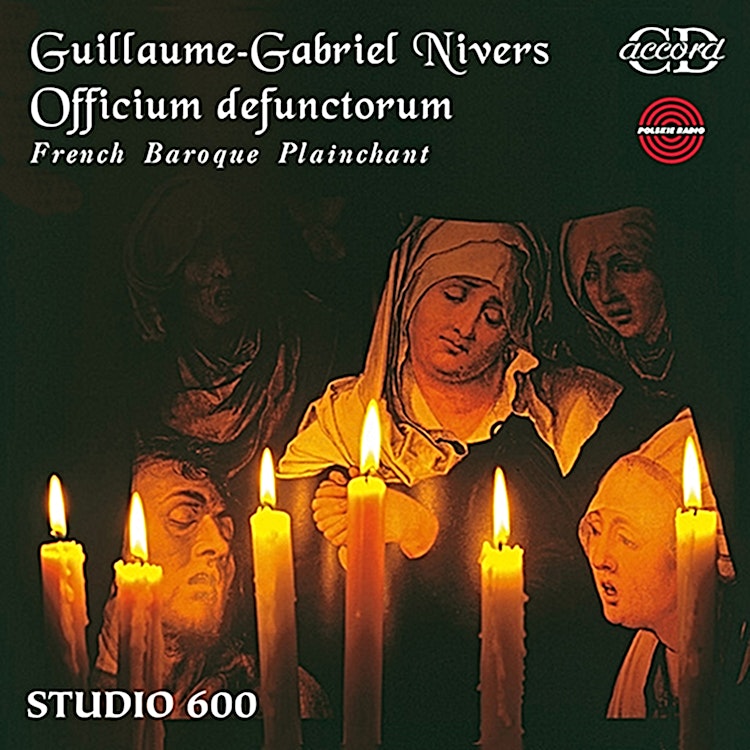
Guillaume-Gabriel Nivers, a composer and theorist of 'classic' plainchant, believed that the rules of chant were certain and indisputable because they were based on mathematics.
Recording & Production
This album was recorded at the Pauline Friars Church in Warsaw from May 23-25, 1995.
Interpretation
The performers on this album use polyphonic improvisation techniques, originating from Franciscan friars in Italy after the Council of Trent, which have been preserved in Corsican chant.
Composer Biography
Guillaume-Gabriel Nivers, who died in 1714 at 82, spent nearly three-quarters of his life as organist at the church of Saint-Sulpice in Paris.
Compositional Technique
Nivers adapted traditional Gregorian chant for female performers by shortening passages, simplifying notation, and adding Baroque ornaments while maintaining liturgical dignity.
Performer Biography
STUDIO 600, founded in 1989, is the only ensemble in Poland that treats plainchant as both liturgy and a testament to past vocal and literary culture.
Historical Context
The Council of Trent, which began in 1545 and concluded in 1564, marked the beginning of the Counter-Reformation for the Catholic Church.
You might also enjoy...
Splendor da ciel
Parallel Worlds
Mendelssohn, Fanny: Vocal Music
Mass of Tournai / St. Luke Passion
Historia Sancti Eadmundi: De la liturgie dramatique au drame liturgique
The Night of Saint Nicholas. A Mediaeval Liturgy for Advent
A Worcester Ladymass
Gregorian Chant And Medieval Polyphony (L'Arbre De Jesse)