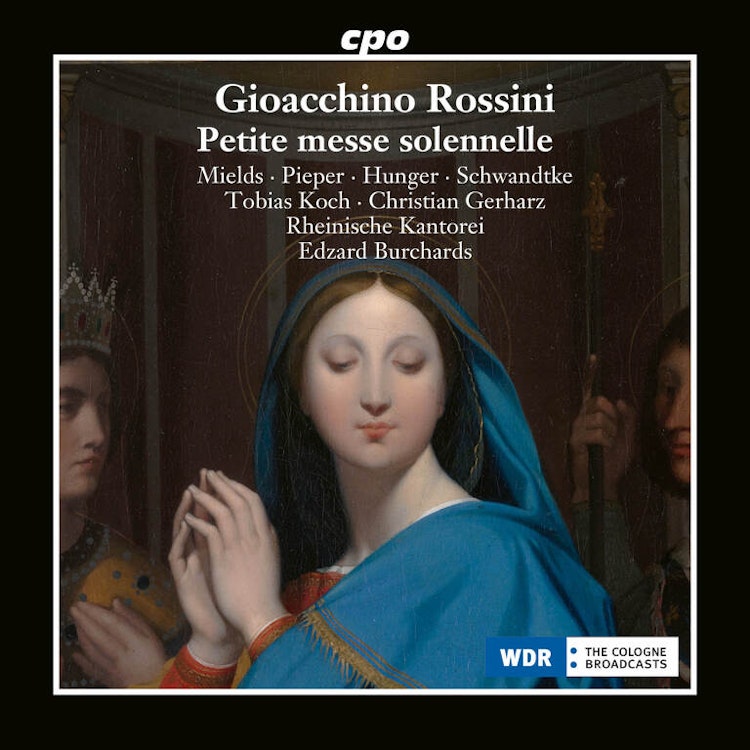
Rossini's 'Petite messe solennelle' was composed in 1863 for the dedication of the private chapel of Count Michel-Frédéric Pillet-Will, a nobleman banker and friend of Rossini.
Compositional Technique
Rossini's 'Petite messe solennelle' includes two double fugues, with the 'Cum sanctu spiritu' movement featuring a 'Bachian' double fugue.
Composer's Artistic Vision
Rossini ironically commented on his 'Petite messe solennelle' in the autograph manuscript, questioning if it was 'sacred music' or 'sacrilegious music' given his background in opera buffa.
Recording & Production
For this recording, the second piano part of the 'Petite messe solennelle', which typically doubles the chorus, was omitted, and pianist Tobias Koch adapted the music for a historical Erard grand piano.
Composer's Artistic Vision
Rossini preferred the original reduced version of the 'Petite messe solennelle' to the orchestral version, which he arranged only out of 'self-defense' against Parisian critics.
Compositional Technique
The title 'Petite messe solennelle' is a humorous misnomer, as it refers only to the small instrumentation, not the work's considerable length.
Composer Biography
Gioachino Rossini ended his opera career in 1830 after composing 39 stage works in less than two decades, though his compositional work continued.
You might also enjoy...
Rossini: Stabat Mater
Rossini: Stabat Mater
Rossini: Stabat Mater
Rossini: Petite messe solennelle
Rossini: Petite Messe Solennelle
Rossini: Petite messe solennelle
Rossini: Petite messe solennelle; Stabat Mater
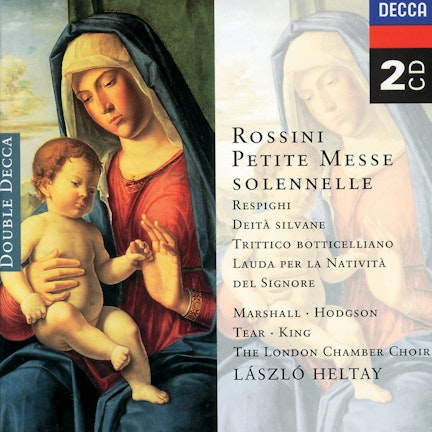
Rossini: Petite Messe Solenelle/Respighi: Deite Silvane etc.
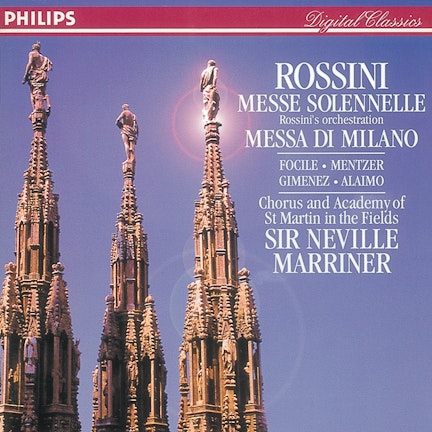
Rossini: Petite Messe solennelle; Messa di Milano
Frescobaldi: Edition Vol. 3, Masses
Scarlatti: Te Deum, Stabat Mater, Magnificat, Laetatus sum