After moving to Paris in 1855, Rossini turned his house into a meeting point for artists and intellectuals, where discussions about the future of sacred music likely took place.
Compositional Technique
Rossini's Petite Messe solennelle combines operatic melodies with severe counterpoint, chamber arias, and a cappella choral sections, reflecting a new liturgical style.
Composition History
Rossini, at 70 years old, was not intending to write a Mass until circumstances led him to dedicate his final seven years to creating his last masterpiece, the Petite Messe solennelle.
Composer's Artistic Vision
Rossini's Petite Messe solennelle offered an 'eclectic' solution to the contemporary debate about sacred music, preserving the past while embracing modern musical innovations.
Instruments
The original version of the Petite Messe solennelle used two pianos and a harmonium, with the harmonium chosen for its organ-like sound and popularity in Parisian salons for private sacred music.
Composition History
The Mass was premiered on March 14, 1864, at the inauguration of banker Alexis Pillet-Will's new palace in Paris, exactly three years after Louis Niedermeyer's death.
Composition History
Rossini began composing the Petite Messe solennelle as a Kyrie for choir and piano in homage to his deceased friend, the composer Louis Niedermeyer, incorporating a passage from Niedermeyer's own Messe solennelle.
You might also enjoy...
Rossini: Stabat Mater
Rossini: Stabat Mater
Rossini: Stabat Mater
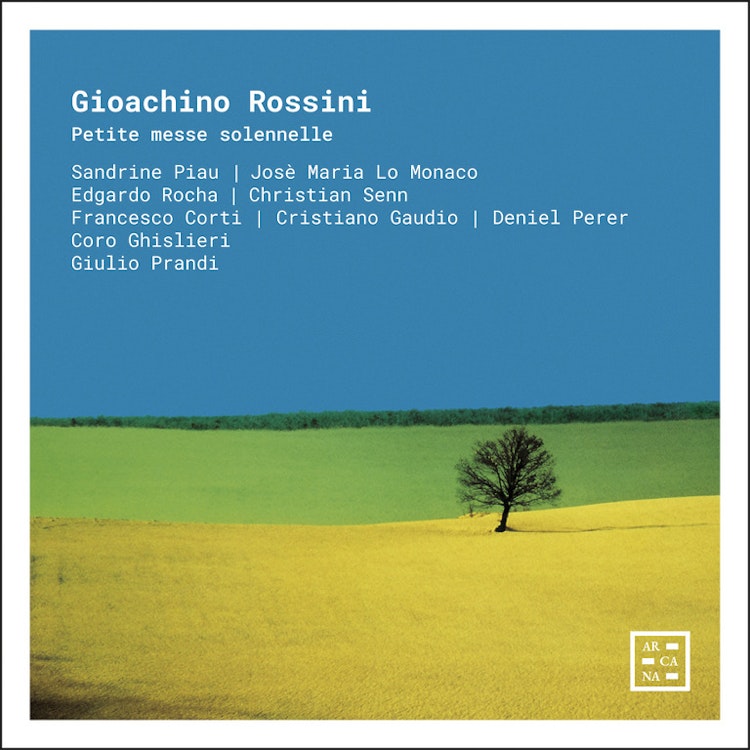
Rossini: Petite messe solennelle
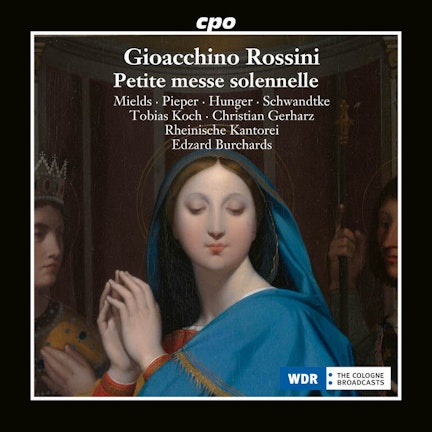
Gioacchino Rossini: Petite messe solennelle
Rossini: Petite Messe Solennelle
Rossini: Petite messe solennelle; Stabat Mater
Rossini: Petite Messe Solenelle/Respighi: Deite Silvane etc.
Rossini: Petite Messe solennelle; Messa di Milano
Frescobaldi: Edition Vol. 3, Masses
Scarlatti: Te Deum, Stabat Mater, Magnificat, Laetatus sum