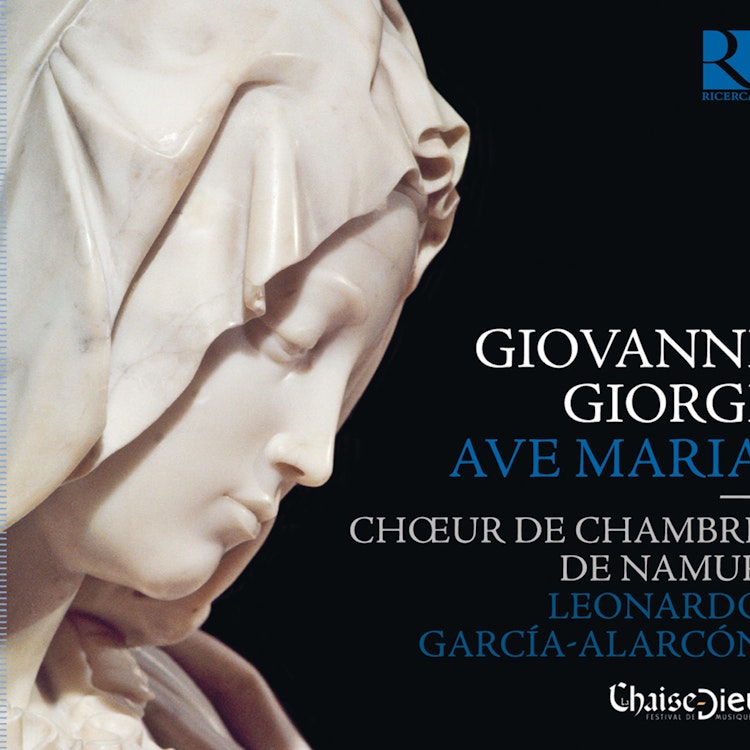
Giovanni Giorgi's Roman compositions remained faithful to a polyphonic style, but his works written in Lisbon show a shift towards a more concertante style, foreshadowing the early Classical period.
Compositional Technique
Giovanni Giorgi preferred tonality over old-fashioned church modes, and rarely used Gregorian chants as a cantus firmus in his compositions.
Composer Biography
Giovanni Giorgi was maestro di capella at San Giovanni Laterano in Rome from 1719 to 1725, succeeding Giuseppe Ottavio Pitoni, before moving to Lisbon where he died in 1762.
Compositional Technique
Giovanni Giorgi's music, with the exception of a few secular cantatas, consists entirely of sacred works, covering various liturgical needs such as Masses, offertories, anthems, hymns, graduals, and motets.
Notable Performances
The pieces by Giovanni Giorgi on this recording were performed in concert by the same artists on August 20, 2010, at the 44th Festival de La Chaise-Dieu, marking their first modern performance.
Instruments
Stéphanie de Failly, the violinist for Clematis, plays a Giovanni-Paolo Maggini violin from 1620, which previously belonged to Edith Volckaert.
Composer Biography
Almost nothing is known about the life of Giovanni Giorgi, including his date and place of birth, or his musical training.
You might also enjoy...
Compère: Missa Galeazescha, Music for the Duke of Milan
Frescobaldi, Gesualdo, Solbiati Music for Accordion
Fagotto, Basson, Dulcian, Curtal
Dulichius: Sacred Motets
Madrid Atrium Musicae: Three Centuries of La Spagna
J. Praetorius: Motets & Organ Works
Philips, P.: Vocal Ensemble Music (Paradisus Sacris Cantionibus)
Arias
Gesualdo: Sacrarum cantionum
Arnold & Hugo de Lantins: Secular Works
Musica a Padova al tempo di Alvise Cornaro
Carlos V: Mille Regretz - La Canción Del Emperador