For the "Arabian Dance," this recording replaces the usual symphony orchestra bass drum with a smaller Middle Eastern dumbek to achieve a "Turkish" sound.
Composer's Artistic Vision
Grieg believed his Peer Gynt music's intentions would only become clear in the context of the stage production, despite the suites living separate lives from the play.
Composer's Artistic Vision
Grieg described the music for "In the Hall of the Mountain King" as a "pure parody" that he could barely listen to, saying it "reeks of cow pies, exaggerated Norwegian provincialism and trollish selfishness!"
Critical Reception
Grieg initially undervalued his Peer Gynt music and did not attend its 1876 premiere, but it was a huge success, and he gradually recognized its power.
Composition History
Edvard Grieg's Peer Gynt music was commissioned by Henrik Ibsen, the playwright, in 1874, though Grieg initially found the subject "terrifyingly intractable."
Album & Artwork
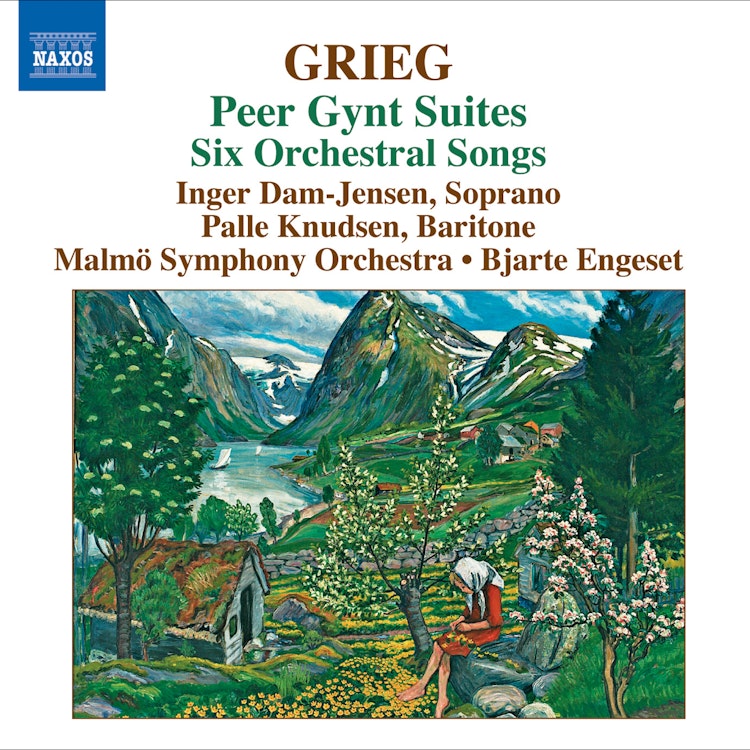
The cover painting is by Nikolai Astrup, a Norwegian artist (1880-1928) who was celebrated as a "national" artist for his primitive interpretation of nature and farm life.
Composer Biography
Grieg lost his only daughter when she was less than a year old, which may explain why many of his lullabies, including "Solveig's Cradle Song," are for a dead child.
You might also enjoy...
Schubert: Symphony No. 9 - Richard Strauss: Four Songs (Live)
Wolf: Orchesterlieder
Wolf: Prometheus
Anna Moffo sings Canteloube: Songs of the Auvergne; Villa-Lobos: Bachianas Brasileiras No. 5; Rachmaninoff: Vocalise