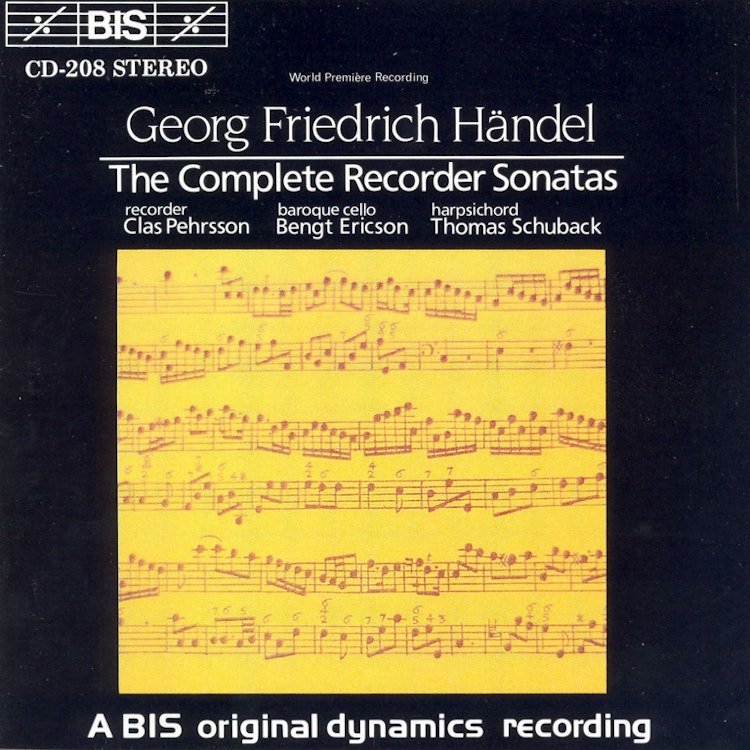
Clas Pehrsson, the recorder player, is self-taught on his principal instrument but studied early music performance with notable figures like Ferdinand Conrad and Nicolaus Harnoncourt.
Historical Context
During the Renaissance, the recorder was the leading instrument of the flute family, but its prominence declined in the Baroque period as composers favored the transverse flute.
Interpretation
The performers chose to play all six sonatas with a harpsichord as the harmony instrument, even though some original manuscripts only specified 'Flauto e Cembalo' for three of them.
Critical Reception
Handel's six recorder sonatas are highly regarded for their musical quality and moderate technical demands, making them popular among amateurs.
Recording & Production
The musical material for this recording is based on David Lasocki and Walter Bergmann's 1979 edition of Handel's recorder sonatas, which used Handel's original manuscripts.
Interpretation
To achieve smooth phrasing and avoid a 'typewriter' sound, the performers sometimes reduce the harpsichord's part when the cello plays virtuosic or polyphonic bass lines.
Recording & Production
The recording process prioritized capturing a 'living' musical atmosphere over technical flawlessness, sometimes choosing a musically vibrant take with a minor technical imperfection.
You might also enjoy...
Prussian Blue: Flute Music at the Court of Frederick the Great
Accademia dell'Arcadia, Roma 1710: Baroque Masterpieces of a Secret Society
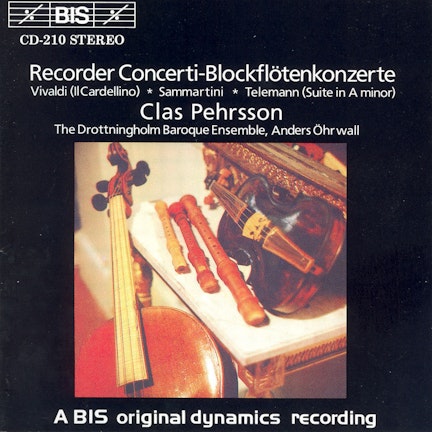
Vivaldi / Sammartini / Telemann: Music for Recorder
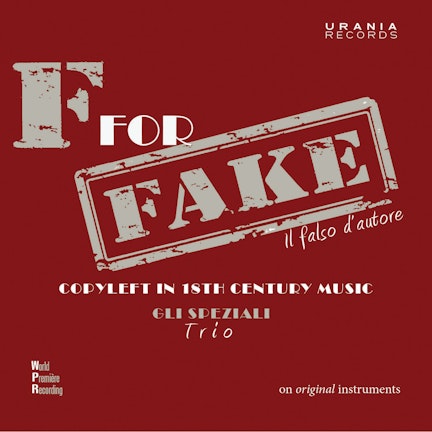
F for Fake: Il falso d'autore
Italian Sonatas 1730: Remembering Naples & Venice
Bach Transcriptions
Sarti: 6 Sonatas for Traversiere Flute & B.C.
Una Follia di Napoli
Sammartini & Handel: Sonatas for a German Flute
Telemann: Trio Sonatas
Graupner: Per il Flauto
Tessarini: Sei Sonate op. 14 · Il Piacier delle dame