The recording features a variety of historical instruments, including a violoncello piccolo, a lirone, a psalterium, and multiple harpsichords and recorders, some custom-made.
Instruments
In the early 18th century, two types of flutes existed: the flauto dolce (recorder), common among aristocrats, and the transverse flute, introduced later to Naples, likely by Austrian soldiers.
Performer Biography
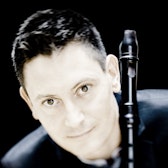
Maurice Steger, the recorder player and director, is acclaimed as the 'Paganini of the recorder' by the Neue Zürcher Zeitung and 'the world's leading recorder virtuoso' by The Independent.
Composition History
The German flautist Johann Joachim Quantz visited Naples in 1725, inspiring Alessandro Scarlatti, who previously disliked wind instruments, to compose sonatas for him.
Historical Context
Before Quantz's visit in 1725, the flute repertory in Naples was almost non-existent, limited mainly to vocal music with obbligato wind instruments.
Composition History
A significant manuscript from 1725 in Naples contains 24 'concerti' for flute, violins, 'violetta', and bass by various composers, though each piece is titled 'Sonata', indicating interchangeable terms.
Historical Context
The year 1725, the album's focus, was a 'holy year' celebrated with special fervor in all Christian churches, and Naples was a world capital of music.
You might also enjoy...
Vivaldi: Sonate à flauto solo
Concordi Musici
Handel: Complete Recorder Sonatas
Accademia dell'Arcadia, Roma 1710: Baroque Masterpieces of a Secret Society
Van Wassenaer and the Recorder in the Low Countries
Purcell: Sonatas & Cantatas
Venezia 1625
Giordani: 6 Flute Concertos
Corelli: Recorder Sonatas, Op. 5
18th-Century Neapolitan Flute Sonatas
Telemann: Tenor Cantatas & Recorder Sonatas
Telemann · Fasch · C.Ph.E. Bach: Flute Concertos | Capella Clementina · Konrad Hünteler · Helmut Müller-Brühl