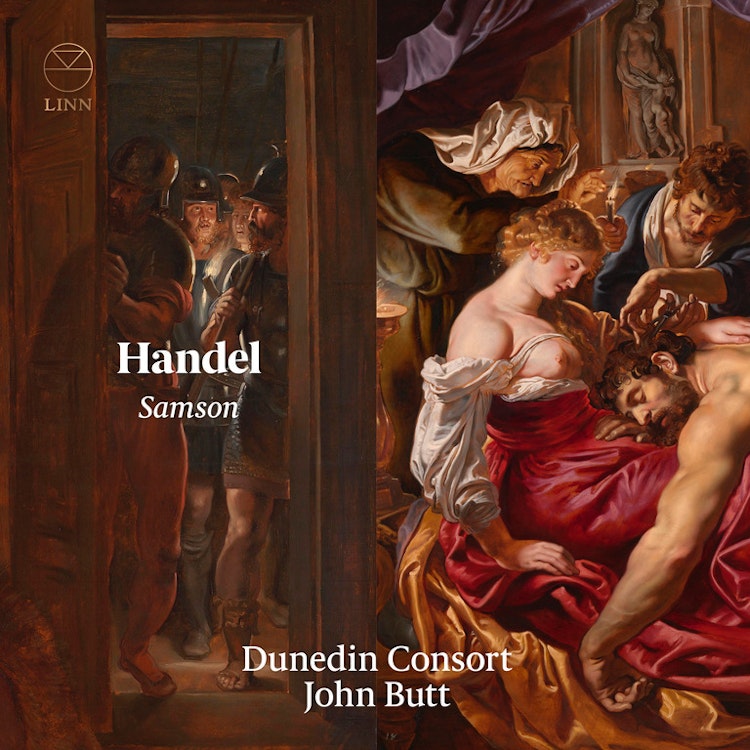
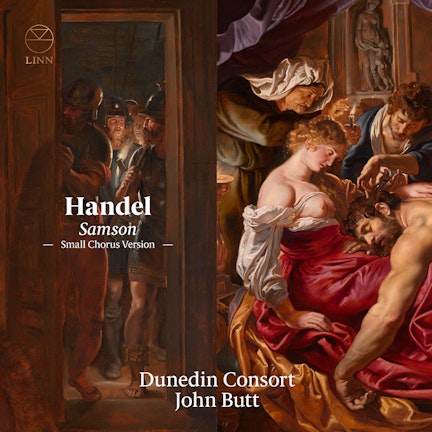
The libretto for Handel's Samson, adapted from Milton's Samson Agonistes, features a unifying theme of dark and light imagery, particularly fitting for the story of a blind man.
Recording & Production
This recording recreates two forms of Handelian oratorio chorus, including one with boy sopranos, to explore historically informed choral practices.
Composition History
The idea for Samson originated from a 1739 gathering where Handel improvised on John Milton's dramatic poem Samson Agonistes, inspiring him to create a major work.
Composition History
Handel's oratorio Samson, premiered in 1743, marked his final departure from Italian opera and a permanent shift to English word-setting.
Critical Reception
Samson was Handel's most frequently performed dramatic oratorio during the rest of the eighteenth century, achieving immediate and lasting success.
Compositional Technique
The inclusion of a Philistine chorus in Handel's Samson, absent in Milton's original, allowed Handel to introduce contrasting musical styles and avoid uninterrupted gloom.
Historical Context
In 1743, John Milton, whose poem inspired Samson, was revered as England's greatest poet and a national figurehead for the Patriot Opposition party, which campaigned for probity in public life.
You might also enjoy...
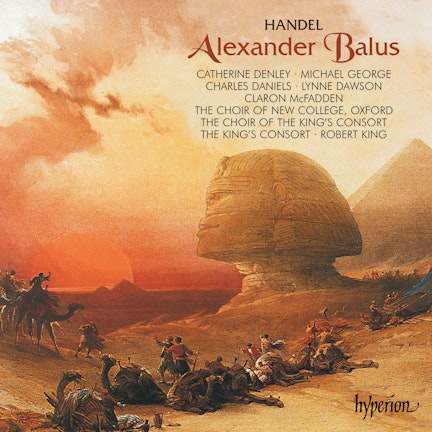
Handel: Alexander Balus
Handel: Samson (Small Chorus Version)
De Fesch: Joseph
Handel: Saul
Graun, C.H.: Easter Oratorio
Handel: Arias
Bach: Jauchzet, frohlocket!
Telemann: Kapitansmusik 1738
Handel: Belshazzar
Handel: Jephtha
Handel : Jephtha
Telemann: Gelobet sei der Herr, TWV 1:602/1216 & Bequemliches Leben, gemächlicher Stand, TWV 1:123