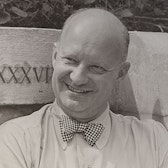
Paul Hindemith, the composer, left Nazi Germany in September 1938 after his works were banned and found a new home in the Swiss mountain village of Bluche.
Composition History
Hindemith's Six Chansons, with texts by Rainer Maria Rilke, were composed in just four days and dedicated to Georges Haenni's traditional choir, possibly as a demonstration of Hindemith's connection to his new Swiss home.
Composer's Artistic Vision
Hindemith emphasized the human voice as a natural instrument, suitable for testing compositional ideas and spontaneous music-making.
Performer Biography
The SWR Vokalensemble Stuttgart is known for its musical research, experimentation, and stylistic breadth, having premiered more works than any other choir in its 65-year history.
Performer Biography
Marcus Creed, the conductor, studied at King's College in Cambridge and Christ Church in Oxford, and has been the artistic director of the SWR Vokalensemble Stuttgart since 2003.
Compositional Technique
In his Mass, Hindemith combined various contrapuntal techniques and compositional models from different periods of Mass history, integrating them into his concept of 'total tonality'.
Composition History
Hindemith's Mass for mixed a cappella choir (1963) was his last work and his first strictly liturgical one, completed during a holiday in the Valais.
You might also enjoy...
Confessions of Faith: Choral Concertos by Bortniansky & Schnittke
For Evening is Coming: Songs of the German Romanticism
Vasks: Plainscapes
Schnittke: Konzert für Chor, Stimmen der Natur & 3 Geistliche Gesänge - Pärt: Dopo la vittoria
Mångård
Finland
Swedish a cappella, Vol. 2: Paradiso
Wellesz: Choral Music
Mátyás Seiber: A Cappella
Brahms-Schumann A Capella Choruses
Great Music of Small Forms
Kodály & Ligeti: Choral Works
Canticle of the Sun: Choral Music by Stephen Dodgson