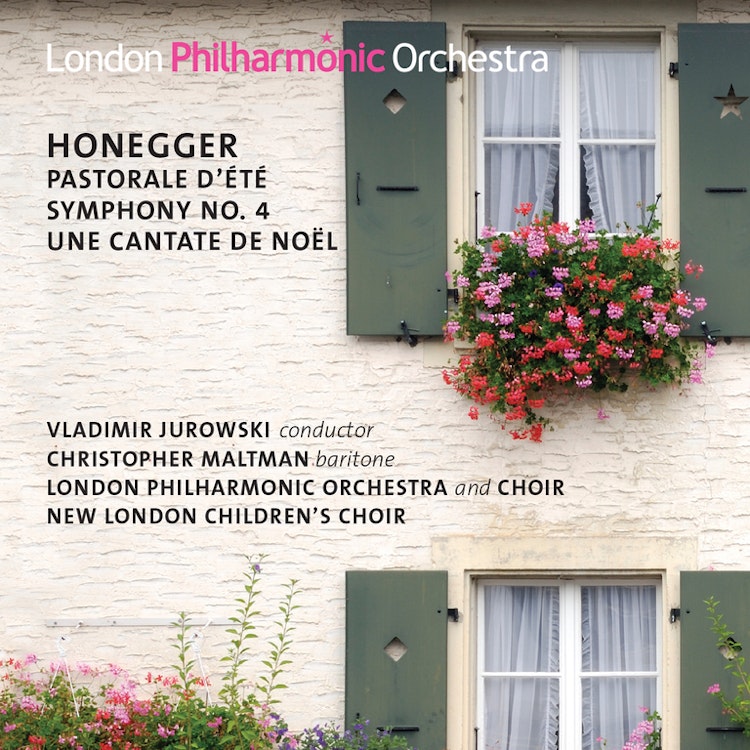
Honegger: Symphony No. 4, Une Cantate de Noël, Pastorale d'été
11/1/2011, 7 Tracks, 54:35
Featuring
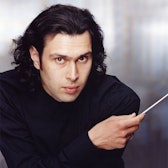
Vladimir Jurowski
Christopher Maltman
London Philharmonic Orchestra
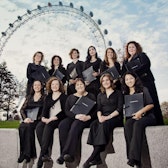
New London Children's Choir
London Philharmonic Choir
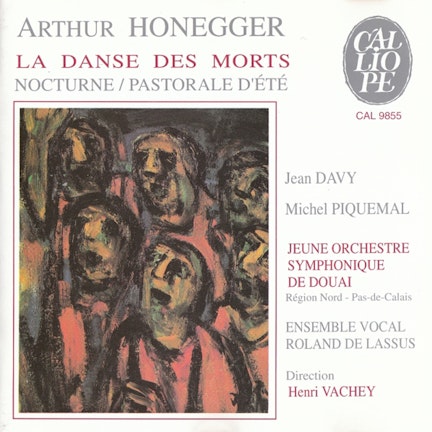
Arthur Honegger
Did you know?
1/7
Composition History
Honegger's final major work, 'Une Cantate de Noël' (A Christmas Cantata), was composed in 1952-53 for the Basel Chamber Choir and its conductor Paul Sacher, adapted from earlier music for an abandoned project.
Composition History
Honegger's Fourth Symphony, subtitled 'Deliciae Basilienses' ('The delights of Basel'), was a commission from conductor Paul Sacher and intended to pay homage to Basel's cultural life.
Historical Context
Honegger composed his Fourth Symphony in 1946, a 'year of misfortune' after World War II, intending it to bring hope and temporary escape from the post-war atmosphere.
Compositional Technique
The Fourth Symphony incorporates specific tributes to Basel, including a central Larghetto based on a Swiss folk song 'Z' Basel a mim rhy' and the medieval melody 'Basler Morgenstreich' in the finale.
Compositional Technique
The 'Christmas Cantata' features a multilingual text and includes a 'quodlibet' (medley) of carols from different countries, sung in their original languages.
Composer's Artistic Vision
Honegger aimed to write music that was both accessible to a broad audience and sophisticated enough for genuine music lovers, similar to Mozart's approach.
Composer Biography
Arthur Honegger, a Swiss-born composer, was initially associated with 'Les Six', a group of 1920s Parisian modernist musicians, but he soon diverged from their views.