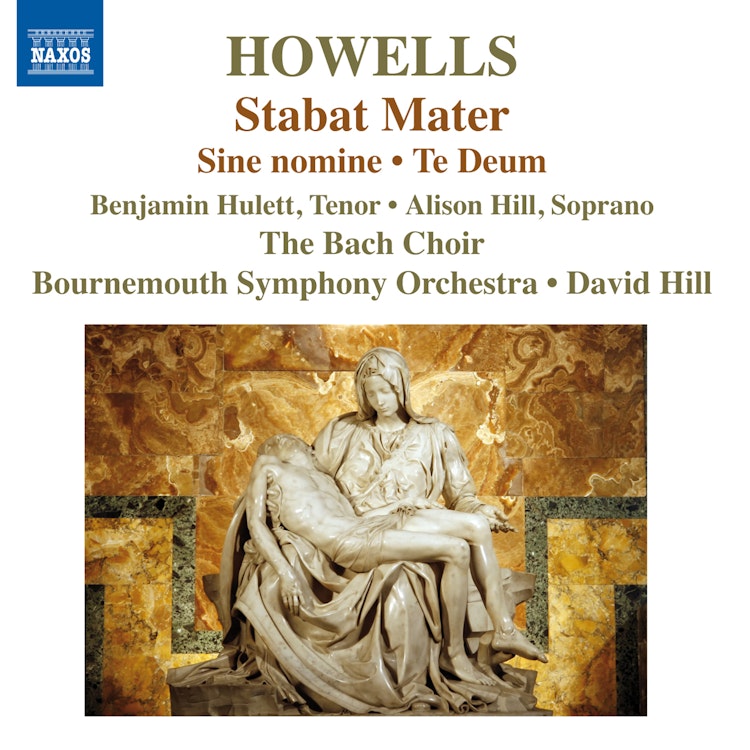
In the Stabat Mater, Howells used a highly chromatic harmonic idiom and complex choral writing, representing the furthest he ever ventured in these aspects.
Composer Biography
Herbert Howells, the composer, studied at the Royal College of Music under Charles Stanford and Charles Wood from 1912 to 1916.
Composition History
The Stabat Mater, a large-scale choral and orchestral work, was a direct musical response to the death of Howells's nine-year-old son, Michael, in 1935.
Critical Reception
At its 1922 premiere, Howells's Sine nomine, an impressionistic work with unusual scoring, failed to make an impression on the audience or critics and sank without trace for 70 years.
Composition History
Sine nomine, an orchestral work with wordless vocal parts, was commissioned at the instigation of Edward Elgar for the 1922 Gloucester Three Choirs Festival.
Composer's Artistic Vision
Howells's Stabat Mater was visually inspired by Michelangelo's Pietà in St Peter's Basilica, Rome, which reminded him of clinging to his own son.
Recording & Production
David Hill, the conductor of this recording, discovered Howells's revised tempo markings for the Stabat Mater in a score given to him by a friend of the original premiere conductor.
You might also enjoy...
Christmas Fantasy
New College: Commissions & Premieres
Whitbourn, J.: Luminosity
Berkeley: Stabat Mater, Batter My Heart & Magnificat
Tavener . Pärt . Górecki
Howells: Collegium Regale; Windsor & New College Services & Other Choral Music
Tavener, J.: Ex Maria Virgine (Clare College Choir)