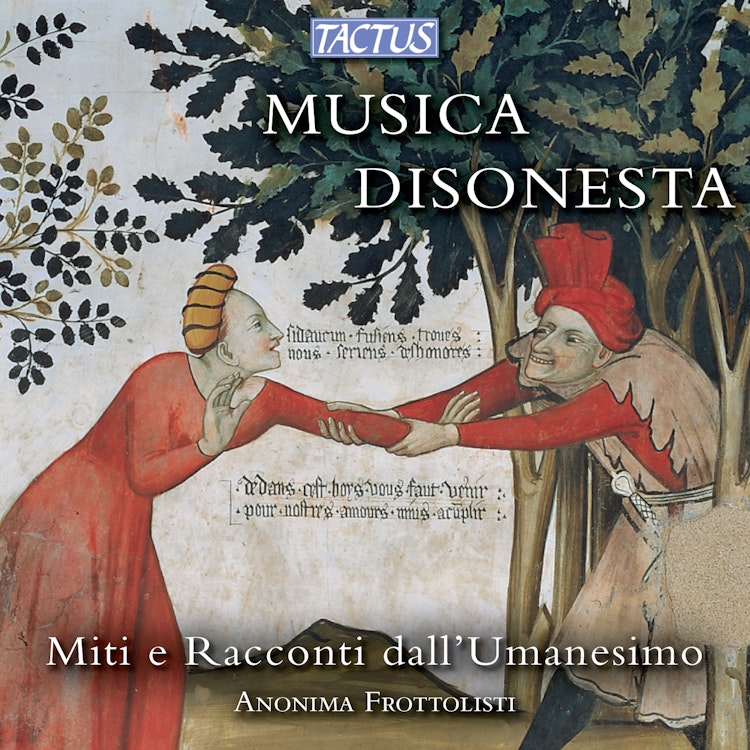
Frottole often feature characters like Turlulù, Rosina, and Scaramella, who represent vices, virtues, and other human conditions, similar to early Commedia dell'Arte masks.
Critical Reception
For a long time, Italian musical production of the early Renaissance, including frottole, was relegated to a secondary role compared to international polyphony.
Composition History
Ottaviano Petrucci, a printer from Fossombrone, was instrumental in popularizing frottole, publishing eleven books of them starting in 1504.
Performer Biography
Anonima Frottolisti, formed in Assisi, focuses on the repertoire of European Humanism, using original scores and exploring the interplay between oral and scholarly musical traditions.
Critical Reception
The term "frottola" acquired a negative connotation in Italian over time, often associated with "cheap songs" or "fibs," due to their rustic, dialectal, and often satirical content.
Album & Artwork
The album title, "Musica Disonesta" (Indecent Music), is inspired by an anonymous 1442 account from Forlì, where a song heard during Mass was deemed too indecent to be written down.
Historical Context
The Quattrocento (15th century) saw a blend of written and oral cultural traditions, with new forms like frottole emerging as sophisticated entertainment.
You might also enjoy...
Ciaconna
L'arbre de mai: Chansons & danses au temps de Guillaume Dufay
Piazzolla: Tango Works
Philip Henderson: From the Old World to the New World