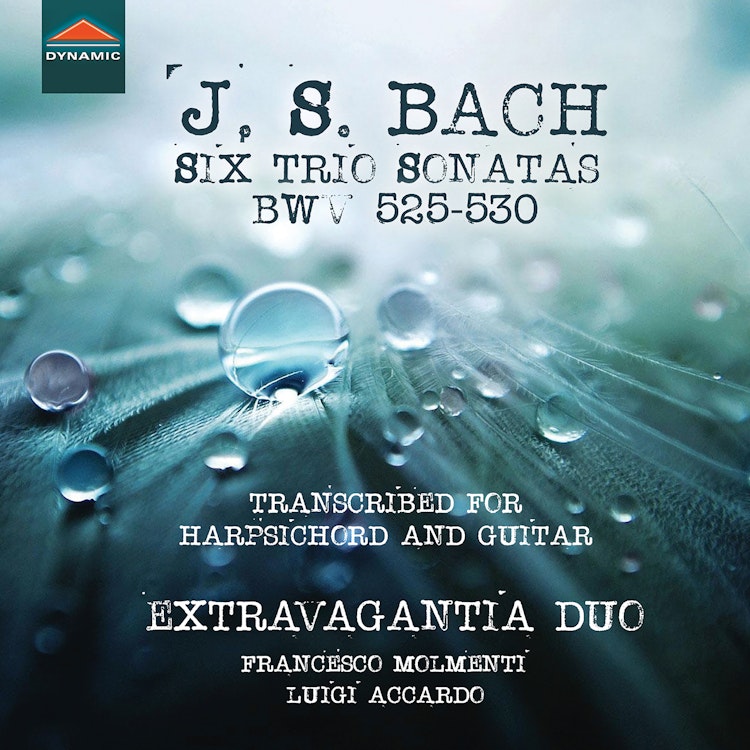
The performers on this album aimed for a historically informed interpretation, dividing the organ's three-part writing between the guitar (first keyboard) and the harpsichord (second keyboard and pedalboard).
Historical Context
In the Baroque period, it was common for composers like Bach to adapt their music for different instruments, either for wider dissemination or to explore new compositional possibilities.
Composer's Artistic Vision
Bach's Trio Sonatas for organ reflect his interest in numerology and symbolic representation, particularly the number three, which signifies supreme synthesis.
Composition History
J.S. Bach's six Trio Sonatas for organ were originally composed between 1727 and 1732, intended for his elder son, Wilhelm Friedemann Bach, to help him become an accomplished organist.
Instruments
Francesco Molmenti plays a guitar made by Gernot Wagner in Frankfurt, Germany, in 2001.
Compositional Technique
Over half of the movements in Bach's organ sonatas use pre-existing musical material, or would later be re-used in new compositions; only Sonata No. 6 is entirely original.
Instruments
Luigi Accardo performs on a harpsichord made by Federico Mascheroni in Milan in 2015, modeled after a Pascal Taskin instrument from 1769.
You might also enjoy...
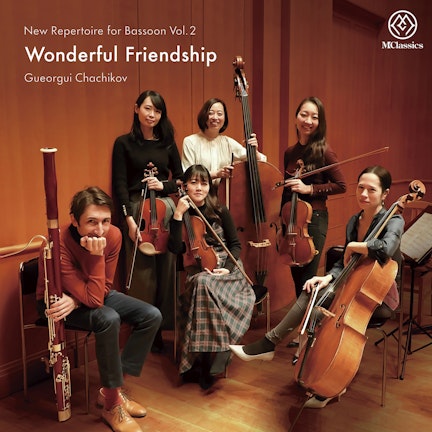
New Repertoire for Bassoon, Vol. 2: Wonderful Friendship
Timothy Reynish Live in Concert, Vol. 3
Gershwin
Zapateado Mexicano
Euphonium Music: Roggen, D. / Mozart, W.A. / Weber, C. / Tchaikovksy, P. / Balissat, J.