Early critical reception of Bach's Lutheran Masses was negative, with some 19th-century critics like Spitta and Schweitzer calling them "mindless adaptations" or "perfunctory."
Compositional Technique
Bach frequently reused his own material, a practice known as parody, and the Lutheran Masses are a prime example of this artistry.
Performer Biography
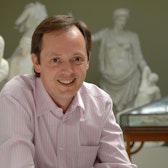
Harry Christophers, the conductor, was awarded a CBE in the 2012 Queen's Birthday Honours for his contributions to music.
Composition History
Bach's Lutheran Masses, which consist only of the Kyrie and Gloria, evolved from liturgical reforms by Martin Luther that fragmented the traditional Mass Ordinary.
Interpretation
The conductor, Harry Christophers, decided to use a solo voice approach for Bach's Lutheran Masses, with two voices per part in the choruses to support demanding phrases.
Performer Biography
The Sixteen, the ensemble performing on this recording, is recognized as one of the world's greatest ensembles, known for early English polyphony, Renaissance, Baroque, and 20th/21st-century music.
Compositional Technique
Bach's Lutheran Masses extensively use parody, with 20 out of 24 movements in BWV 233-6 being reworkings of earlier cantata movements.
You might also enjoy...
J. S. Bach: Lutheran Masses, Vol. 1
Bach Masses
Choral Music (Sacred) - Zelenka, J.D. / Hasse, J.A. / Heinichen, J.D. / Homilius, G.A.
J.S. Bach: Cantatas Vol. 22
J.S. Bach: Easter Oratorio - Magnificat
Carl Philipp Emanuel Bach: Magnificat. Die Himmel erzählen die Ehre Gottes
Bach: Magnificat - Auf schicke dich
Magnificat - Christmas in Leipzig
Handel Edition, Vol. 7
J.S. Bach: Mass in B Minor
Bach, J.S.: Mass in G Minor, BWV 235; Eine feste Burg ist unser Gott, BWV 80