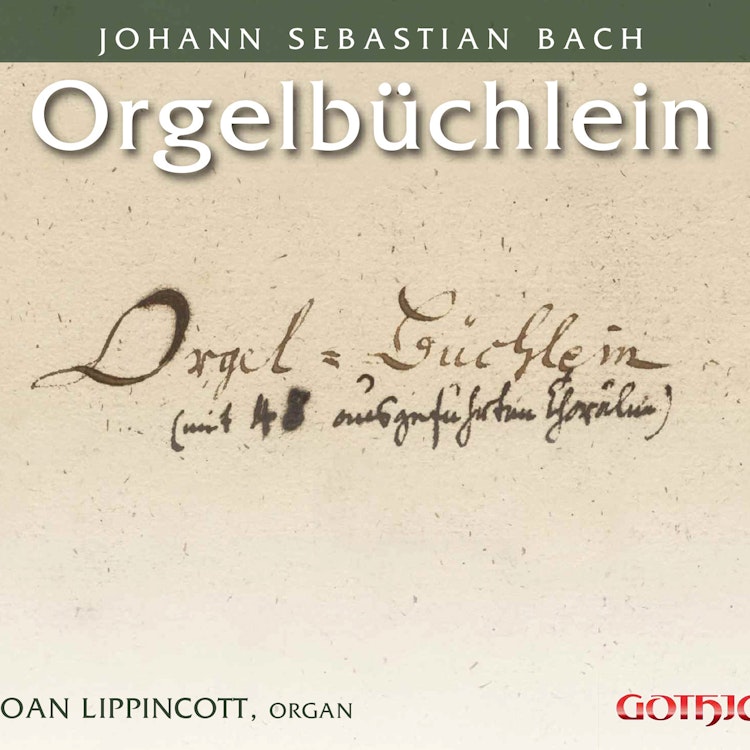
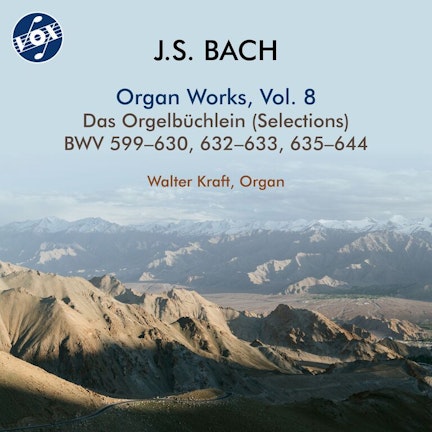
Bach intended the Orgelbüchlein to instruct beginner organists in developing chorales in diverse ways and acquiring facility in pedal playing, as the pedal parts are treated in an obbligato manner.
Compositional Technique
A distinctive feature of the Orgelbüchlein is Bach's use of a single accompanimental motive that remains constant throughout a piece, creating a unified mood or 'affect,' unlike the changing motives common in earlier works.
Composer Biography
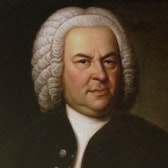
Though the title page mentions Bach's position in Cöthen, the Orgelbüchlein was primarily composed during his tenure in Weimar (1708-1717), where he served as organist and later concertmaster.
Interpretation
Bach's pupil Johann Gotthilf Ziegler stated that Bach instructed him to play chorales not merely in an offhand way, but according to the meaning of the words.
Compositional Technique
The Orgelbüchlein reflects Bach's focus on motivic development, part-writing, harmony, and musical expression, often in rigorous four- and five-part harmony where each voice has melodic and contrapuntal importance.
Composition History
J.S. Bach's Orgelbüchlein (Little Organ Book) was his first attempt at compiling an encyclopedic collection of organ chorales, originally planned for 164 pieces.
Recording & Production
This recording uses DXD (Digital eXtreme Definition) technology, which captures sound in 24-bit words at a sample rate of 352.8 kHz per channel, significantly higher than a standard CD.
You might also enjoy...
Francisco Correa de Arauxo: Tientos & Canciones
Joseph Rheinberger: Organ Pieces, Vol. 3
Muffat: Complete Apparatus Musico-Organisticus
Frescobaldi: Fiori musicali, Op. 12 (Excerpts)
Jehan Titelouze: Hymnes de l'église
Bach: Das Orgelbüchlein
De Torres: Complete Organ Music
Widor: Complete Organ Symphonies Vol. 1: Gothique & "Romane"
Cabezón: Complete Keyboard Works, Vol. 4
Bach, J.S.: Organ Music, Vol. 7 - Orgelbuchlein (Das)
Bach, J.S.: Organ Works, Vol. 3 - Orgelbuchlein, Part 1
Bariolla: Ricercate for Organ
Speth: Ars Magna Consoni et Dissoni, Music for Organ