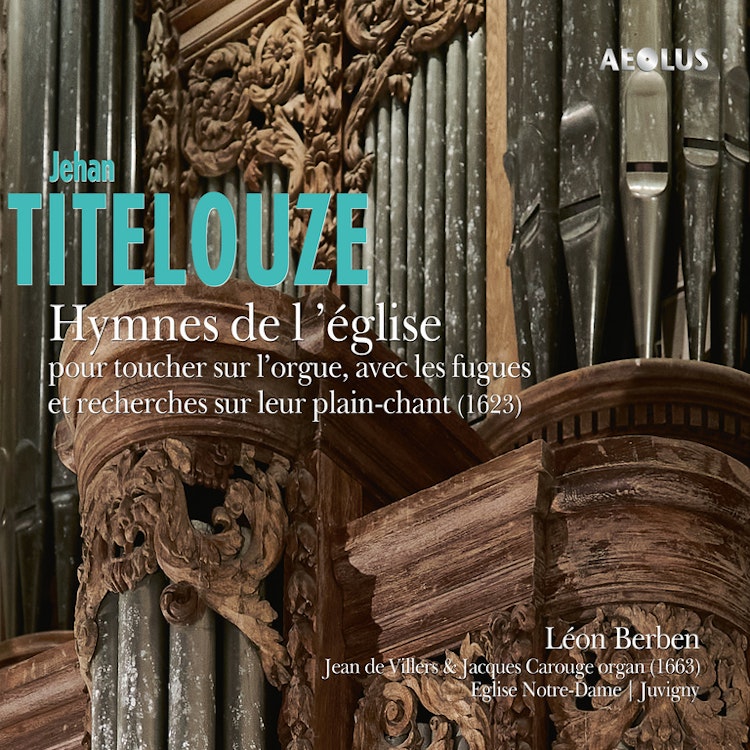
Titelouze's compositions are strictly polyphonic and feature erudite counterpoint, setting them apart from the popular dance rhythms found in other music of his era.
Historical Context
In 1660, a Royal embargo on engraved music in France was lifted, which was a monumental event for printed music, previously monopolized by families like Ballard.
Composer Biography
Jehan Titelouze, regarded as the 'father' of the French classical organ school, was not French but born in Saint-Omer in the Spanish Netherlands.
Performer Biography
Léon Berben, the organist on this recording, was the last student of renowned early music specialist Gustav Leonhardt.
Instruments
The organ used for this recording, built by Jehan de Villers and Jacques Carouge in 1663, underwent significant modifications and restorations over centuries, including a major one from 1990 to 1994.
Composer's Artistic Vision
Titelouze's 1623 publication, Hymnes de l'église, was partly a response to the lack of suitable organ music for liturgical use and aimed to help inexperienced musicians.
Interpretation
Titelouze's music, like much early 17th-century scores, is considered 'incomplete' as written, requiring embellishments and diminutions to be fully realized in performance.
You might also enjoy...
Valeri: Complete Organ Music
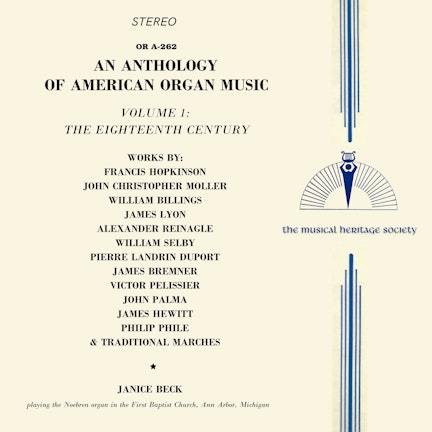
An Anthology of American Organ Music: Vol. 1 - The Eighteenth Century
Orgues de Sicile (Organs of the World, Vol. 1)
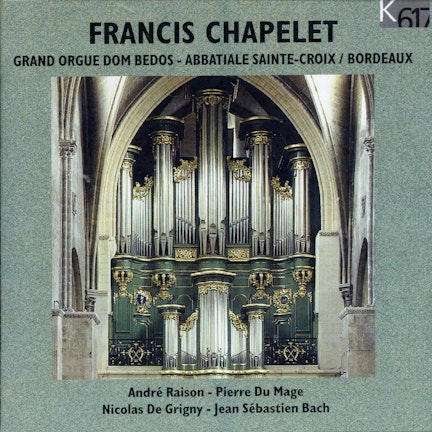
Raison, Du Mage, De Grigny & Bach: Organ Works
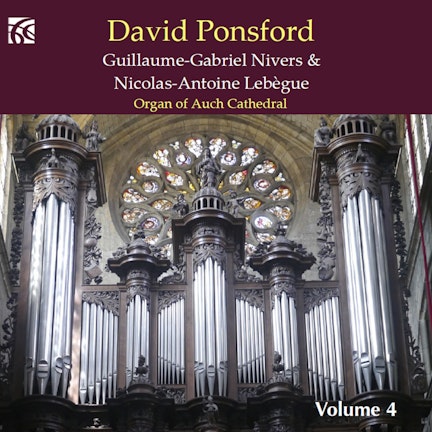
French Organ Music Volume 4
French Organ Music from the Golden Age, Vol. 4
French Organ Music from the Golden Age Vol. 7: Louis Marchand & Jean-Adam Guilain