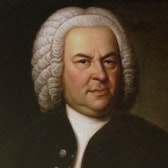
Bach was obligated to provide new vocal music for the Cöthen court only twice a year: for Prince Leopold's birthday and for New Year's Day.
Album & Artwork
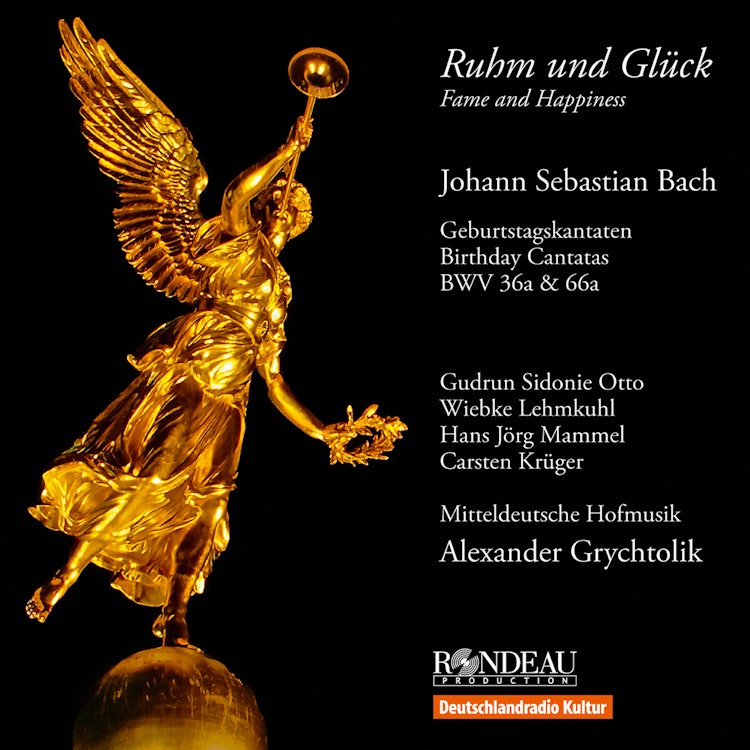
The album cover features the goddess of fame, Fama, whose figurine is found on the cupola of the Kunstakademie Dresden (Brühl's Terrace).
Compositional Technique
Bach often reused older musical material, a practice known as 'parody', due to his heavy workload, especially when composing multiple church cantatas each month.
Composition History
The cantata BWV 36a, 'Steigt freudig in die Luft', was likely performed in 1725 for Princess Charlotte Friederike of Anhalt-Cöthen's 23rd birthday, despite a misprint in a later publication suggesting 1726.
Recording & Production
This recording presents the first CD reconstructions of Bach's birthday cantatas BWV 36a and BWV 66a, which were previously considered lost.
Historical Context
The libretto for the serenata BWV 66a, 'Der Himmel dacht' auf Anhalts Ruhm und Glück', by Christian Friedrich Hunold (a popular poet using the pseudonym 'Menantes'), reflects courtly culture and concerns about the dynastic succession, as Prince Leopold was childless at the time.
Interpretation
The reconstruction of the serenata BWV 66a suggests it was likely performed semi-staged with costumes and gestures, given the dramatic roles assigned to the vocal soloists Fama (goddess of fame) and Happiness.
You might also enjoy...
Bach: Funeral Cantatas
Telemann: Die Tageszeiten / Daran ist erschienen die Liebe Gottes
O erhabnes Glück der Ehe
Caldara: Costanza Vince Il Rigore (La) / La Lode Premiata
A Baroque Festival
J.S. Bach: Trauerode, BWV 198
Christmas Music - Scarlatti, A. / Corelli, A. / Pachelbel, J. / Bach, J.S.