The Tanzbüchlein der Margarete, a 15th-century dance book from the Burgundian court, is notable for its entirely black parchment pages with notes and text written in silver and gold ink.
Composition History
The song Kein Adler in der Welt so schön was composed for the 1534 wedding of Katharina Adler, a member of an influential Augsburg merchant family, whose family name is referenced by the 'eagle' in the title.
Compositional Technique
The motet Proch dolor/Pie Jesu, likely a lament for Maximilian I, features 'eye music' where all note heads are blackened to visually represent mourning.
Cultural Impact
The close connection between Maximilian I and artists, including his strategic use of written works and art to secure his legacy, became a popular theme in the 19th century.
Composer's Artistic Vision
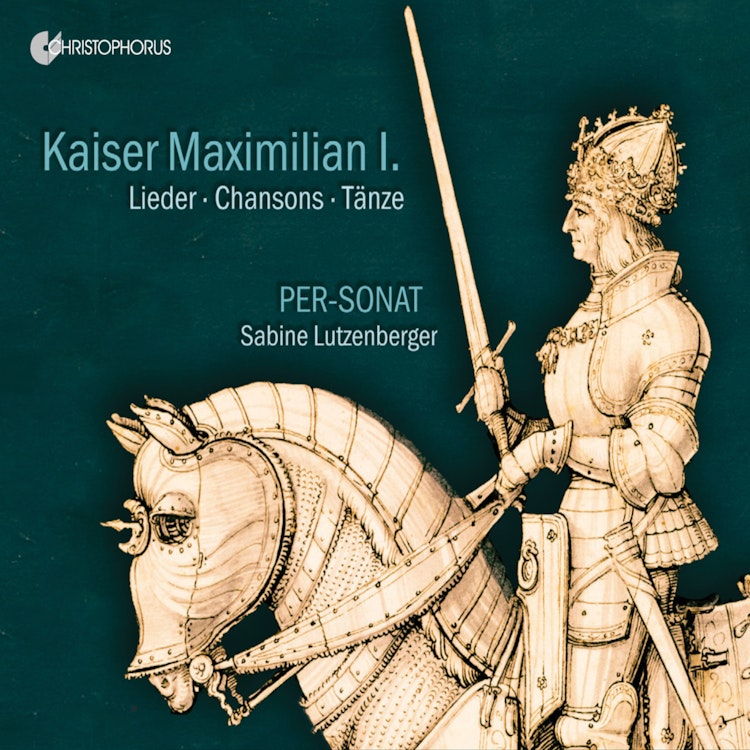
Maximilian I viewed music as a crucial tool for representation and a means of recreation, especially for dances and popular masques at his court.
Historical Context
Maximilian I, the Holy Roman Emperor, is celebrated as a patron of the arts and a 'lover of music', though it's uncertain if he was musically talented himself.
Historical Context
Maximilian I's daughter, Margaret of Austria, inherited his love for music and commissioned a lament motet, Proch dolor/Pie Jesu, for his death in 1519.
You might also enjoy...
Straight from the Heart: The Chansonnier Cordiforme
Schola Aeterna - Chants à la vierge
The Splendour of Venice
Christmas Music From Finland
Die Kinder des Monsieur Mathieu. Lieder aus dem Film »Les choristes« und weitere Lieder für Kinderchor