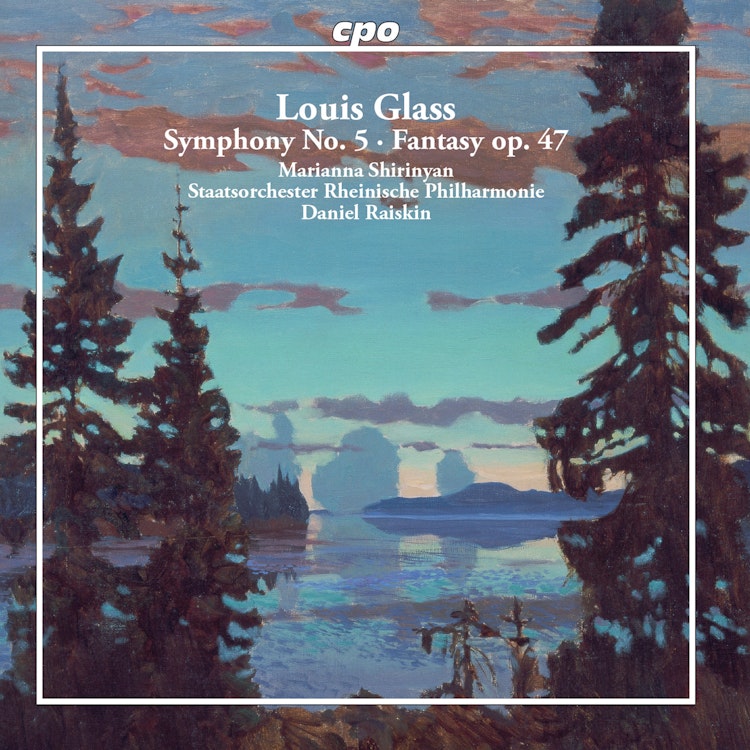
L. Glass: Symphony No. 5 in C Major, Op. 57 "Svastika" - Fantasy for Piano & Orchestra in D Minor, Op. 47
2/2/2018, 5 Tracks, 1:00:05
Featuring
Daniel Raiskin
Marianna Shirinyan
Rhine Philharmonic State Orchestra
Louis Glass
Did you know?
1/7
Critical Reception
Contemporaneous reviews praised Louis Glass's Symphony No. 5, with one critic stating it "towers high above everything that he had written before."
Historical Context
Louis Glass's Symphony No. 5, titled Sinfonia svastika, uses the swastika symbol, which in Theosophy represented "The Wheel of Life, a symbol of circulation," predating its later association with the German Reich.
Notable Performances
Louis Glass's Sinfonia svastika became one of his most frequently performed works, with conductors such as Fritz Busch, Eugen Jochum, and Leif Segerstam having performed it.
Composer's Artistic Vision
The Fantasia for Piano and Orchestra by Louis Glass reflects his connection to Theosophy through its introspective motto: "From the spirit's eternal canopy tones calling man sound down. And man turns away from the world and remains alone in order to find peace."
Composition History
Louis Glass played the organ at the first meeting of the Danish section of the 'Order of the Star of the East' in 1912, an organization founded by Theosophist Annie Besant.
Performer Biography
Marianna Shirinyan, the pianist on this recording, launched her career after winning five prizes at the ARD International Music Competition in 2006.
Composer's Artistic Vision
Louis Glass's works from around 1913 onwards, including the Fantasia for Piano and Orchestra and Symphony No. 5, were influenced by Theosophy, a spiritual movement.
You might also enjoy...
Rachmaninoff: Symphony No. 2 in E Minor, Op. 27 & Vocalise, Op. 34 No. 14 (Remastered 2023)
Tchaikovsky: Symphony No. 5, Capriccio Italien
Rachmaninoff: Symphony No. 1 in D Minor, Op. 13 & Vocalise in C-Sharp Minor
Tchaikovsky: Symphony No. 5 - Capriccio Italien
Rachmaninov: Symphony No. 2 - Vocalise
Rachmaninov: Symphony no.2
Rachmaninov: Symphony No. 3 / Melodie in E / Polichinelle