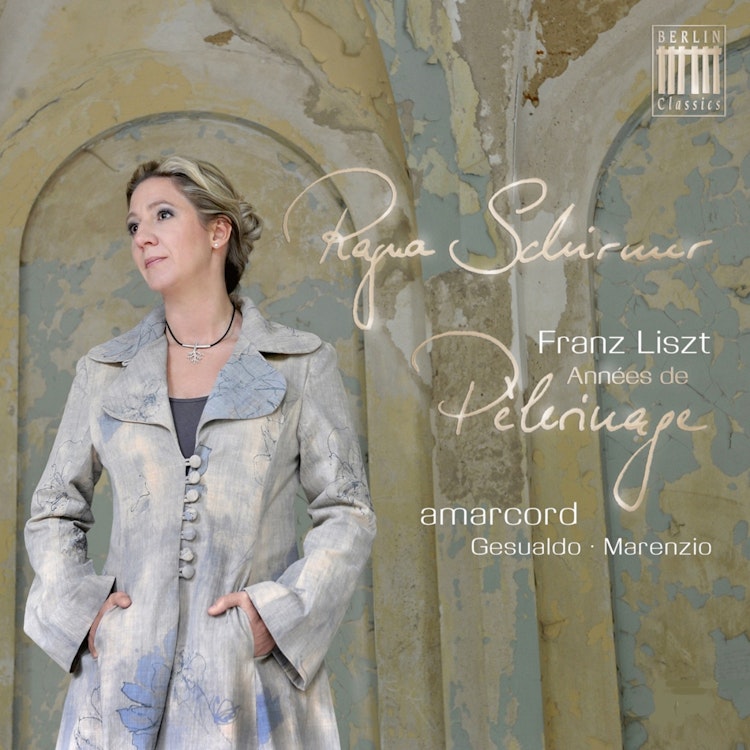
Liszt: Années de pèlerinage, S. 160-163 - Gesualdo & Marenzio: Madrigals
10/14/2011, 34 Tracks, 3:21:48
Featuring
Ragna Schirmer
Amarcord
Franz Liszt
Carlo Gesualdo
Luca Marenzio
Did you know?
1/7
Historical Context
The madrigal, a polyphonic setting of secular verse, was a crucial musical form during the Renaissance and early Baroque periods, originating around 1520 in Italy.
Historical Context
The d'Este family, important Renaissance patrons, influenced composers like Luca Marenzio and Carlo Gesualdo through their vocal ensemble, Concerto delle Donne.
Composer Biography
Franz Liszt called Étienne Pivert de Senancour's novel "Obermann," which explores philosophical observations and melancholy, "the book that always numbs my pain."
Cultural Impact
Lord Byron's verse epic "Childe Harold's Pilgrimage," published between 1812 and 1818, made him famous and introduced the 'Byronic hero' archetype.
Composition History
Liszt's "Tre Sonetti del Petrarca" were initially composed in 1838 for voice and piano, before being adapted for piano solo.
Composition History
Franz Liszt's "Années de Pèlerinage" (Years of Pilgrimage) were published between 1855 and 1883 and draw inspiration from various literary and artistic sources.
Composer Biography
Carlo Gesualdo, Prince of Venosa, received a musical education but became infamous for murdering his wife, her lover, and possibly his daughter in 1590.
You might also enjoy...
Liszt: Années de pèlerinage, S. 160-163 - Gesualdo & Marenzio: Madrigals
Di Lasso: Madrigale 1587 (Mermann-Madrigale)
Gesualdo: Madrigali, Libri primo & secondo
Gesualdo: 4e Livre de Madrigaux
Gesualdo: Silenzio mio. Il quarto libro di madrigali