Liszt: Sonata in B Minor; 2 Legends; Scherzo & March
2/16/2024, 29 Tracks, 1:07:03
Featuring
Nikolai Demidenko
Franz Liszt
Did you know?
1/7
Composition History
Liszt's Two Legends, dedicated to his daughter Cosima, were completed by 1863 and published in 1866.
Compositional Technique
The Piano Sonata in B minor is cast in a single polymorphous movement, divided into sections, following the model of Schubert's motto-cyclic 'Wanderer' Fantasy.
Composition History
The second of Liszt's Two Legends is about St Francis of Paola, Liszt's patron saint, who is said to have walked across the waters of Messina.
Composer's Artistic Vision
Although Liszt provided no programmatic clues for his B minor Sonata, his students and later works suggest it has general associations with Goethe's Faust, Mephistopheles, and Gretchen story.
Critical Reception
The B minor Sonata received mixed reactions: Brahms and Clara Schumann failed to appreciate it, and Hanslick called it a 'musical monstrosity,' but Wagner celebrated it as 'beautiful beyond all conception'.
Composition History
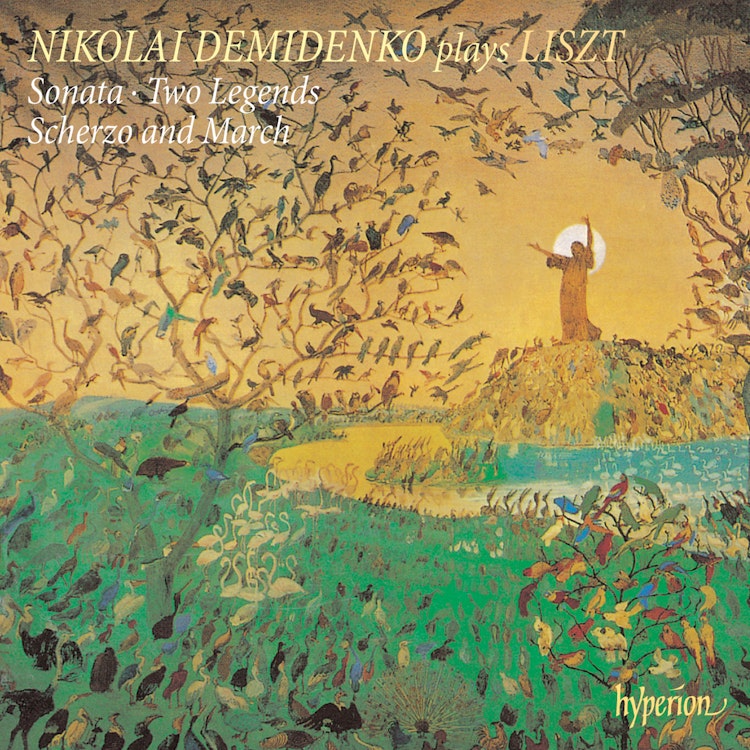
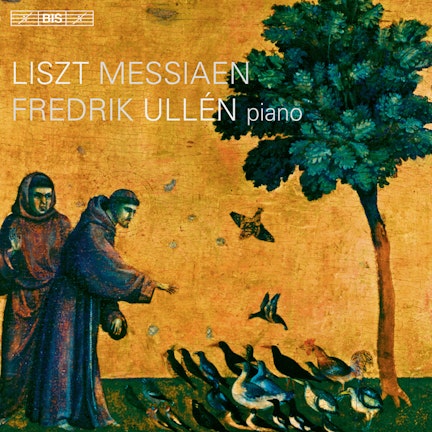
The first of Liszt's Two Legends was inspired by a passage from the Little Flowers of Assisi, describing St Francis of Assisi preaching to birds.
Composition History
Liszt's Piano Sonata in B minor was first publicly performed in Berlin on January 22, 1857, by his pupil and son-in-law, Hans von Bülow, to inaugurate a new Carl Bechstein grand piano.