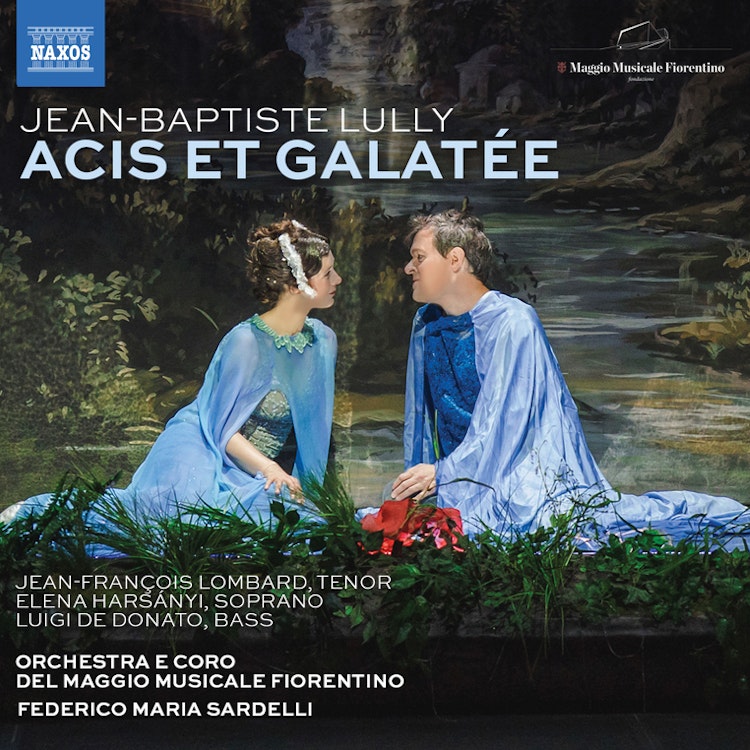
The opera Acis et Galatée was commissioned for lavish celebrations during the Dauphin's visit to the Duke of Vendôme at the Château d'Anet, 80 kilometers from Paris.
Composer Biography
Lully's fortunes began to decline with the rise of Madame de Maintenon, a profoundly religious woman who disapproved of his unscrupulous lifestyle and became the Sun King's secret wife.
Historical Context
Lully, after gaining control of the Académie d'Opéra, transformed it into a personal tool to impose a musical dictatorship across France, preventing anyone from staging operas without his explicit permission and payment of a substantial tax.
Composition History
Acis et Galatée was Lully's final masterpiece, composed after his long-time librettist Philippe Quinault retired and Lully faced opposition from Madame de Maintenon.
Composition History
Jean-Baptiste Lully, the composer, secured his dominant position in French opera by convincing a rival, Perrin, to yield his royal privilege for an opera academy in exchange for monetary compensation while Perrin was imprisoned for debt.
Compositional Technique
Acis et Galatée is a 'pastorale héroïque', distinct from a 'tragédie en musique' by its three-act structure (instead of five) and a plot centered on a love story with mythical elements.
Composer Biography
Lully died at age 54 from an infection caused by a self-inflicted injury to his foot with a conductor's stick during a performance of his Te Deum.
You might also enjoy...
Purcell: King Arthur
Monteverdi: Il ritorno d'Ulisse in patria, SV 325
Steffani: Orlando Generoso
Campra: Idoménée
Marais: Ariane et Bacchus
Handel: Agrippina
Purcell: Dido and Aeneas
Monteverdi, C.: Orfeo (L') [Opera]
Handel: Faramondo, HWV 39
Steffani: Baccanali (Live)
Monteverdi : Il ritorno d'Ulisse in patria [Highlights]