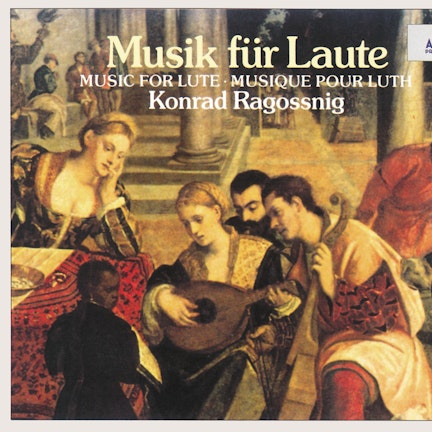
This recording uses both a lute in G and a vihuela in A, as the vihuela, though not a lute, is akin due to its identical tuning and was present in Italy.
Composer Biography
Vincenzo Capirola was born in Leno in 1474, later moved to Brescia and Venice, and died around 1550.
Album & Artwork
The Capirola manuscript is enriched with an extraordinary system of iconographic decorations, featuring a fantasy of subjects like peacocks, mythical creatures, and hunting scenes.
Compositional Technique
The Capirola manuscript includes detailed instructions and suggestions for performance practice, which are considered indispensable for performers then and now.
Composer's Artistic Vision
Vidal, the pupil who copied Capirola's lute works, intended for the manuscript to be preserved perpetually, believing the music contained as much harmony as musical art could express.
Composition History
The manuscript collection of lute compositions by Vincenzo Capirola, a gentleman from Brescia, was drawn up in 1517 by his pupil Vidal.
Compositional Technique
The direction 'tocca pian piano' ('play very softly') in Capirola's Non ti spiaqua lascoltar is considered by historians to be the earliest known dynamic marking.
You might also enjoy...
Jacque Bittner: Pièces de lut
Relic
Romanus: Il cavaliere del liuto
Laurent de Saint-Luc: Pièces pour luth
The Baroque Lute in Vienna
Camerloher: Solo per la gallichone
Sanz / Murcia: Spanish Guitar Music
Italian Lute Virtuosi of the Renaissance
Bella Incognita: The Imagination of Marco dall'Aquila
Intabolatura de leuto de diversi autori Milano: Peschatore che va cantando