The suites on this recording are from Marin Marais' Livre I, with the viol parts published in 1686 and the basso continuo in 1689, and are dedicated to his teacher, Lully.
Composer's Artistic Vision
Marin Marais' greatest achievement was extending the tonal capabilities of the viol, blending French and English styles, and showing a predilection for tone-painting and character studies.
Compositional Technique
Marin Marais' instrumental works for one to three violas da gamba, numbering around 550, were published in a multi-volume collection between 1686 and 1725, the first of its kind.
Composer Biography
Marin Marais was taught composition by Jean-Baptiste Lully, an internationally famous composer, and later stood in for Lully as conductor.
Instruments
The viola da gamba, held between the knees, was enriched with a 7th bass string (A1), an innovation attributed to the French viol master Monsieur de Sainte-Colombe.
Composer Biography
Marin Marais, the composer, began his musical training as a choirboy at Saint-Germain l'Auxerrois in Paris.
Interpretation
Marin Marais left detailed instructions for ornamentation in the prefaces to his printed scores, including symbols for trills, mordents, and glissandos, to ensure the viol was played 'with delicacy'.
You might also enjoy...
Corrette: Les délices de la solitude, sonatas, Op. 20
Marais: Premier livre des pièces de viole
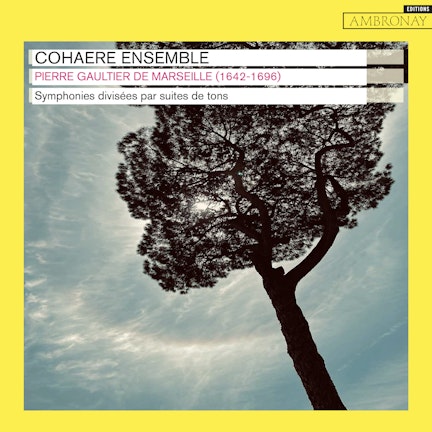
Pierre Gaultier de Marseille
Janitsch: Berliner Quartette
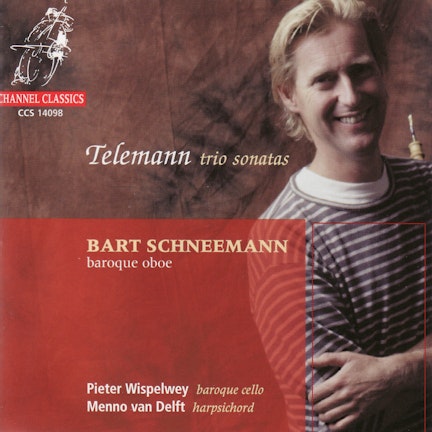
Telemann: Trios & Quartets
Telemann & Molter: Flute and Oboe Quartets
Chamber Music (German 18Th Century) - Janitsch, J.G. / Schaffrath, C. / Graun, J.G. (Il Gardellino)