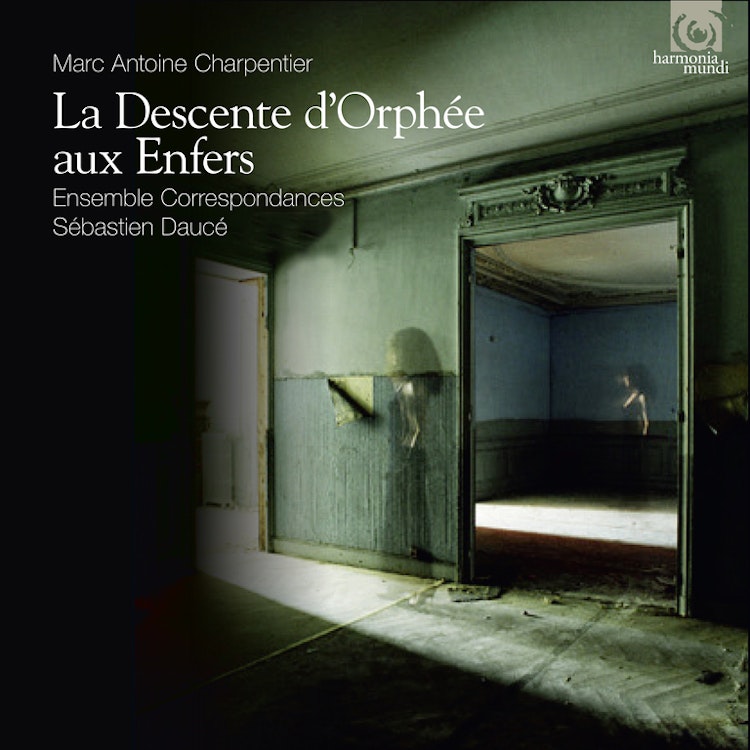
Marc-Antoine Charpentier: La Descente d'Orphée aux Enfers
8/25/2017, 26 Tracks, 54:51
Featuring
Sébastien Daucé
Caroline Weynants
Violaine Le Chenadec
Caroline Dangin-Bardot
Caroline Arnaud
Stéphen Collardelle
Robert Getchell
Davy Cornillot
Etienne Bazola
Nicolas Brooymans
Lucile Richardot
Ensemble Correspondances
Marc-Antoine Charpentier
Did you know?
1/7
Composition History
The manuscript of La Descente d'Orphée aux Enfers ends abruptly, leading to speculation that it is incomplete or that Charpentier deliberately chose this open ending.
Composer Biography
Marc-Antoine Charpentier, the composer, had an ambiguous relationship with opera, facing restrictions from Jean-Baptiste Lully, who controlled access to the Opéra.
Composer's Artistic Vision
Charpentier's Orpheus can be interpreted as an optimistic allegory of the union of body and soul, symbolizing humanity's ability to overcome natural laws through love and art.
Composition History
Many of Charpentier's divertissements, including this work, were created for Mademoiselle de Guise, a cultivated and influential patron who maintained a small court of musicians.
Composition History
Charpentier's only tragédie en musique, Médée, was a failure in 1693, with critics finding it too dense and learned.
Composition History
La Descente d'Orphée aux Enfers was the last short opera Charpentier wrote for Mademoiselle de Guise, dating from late 1686 to early 1687.
Compositional Technique
For Orpheus's singing, Charpentier used the deep timbre of three bass viols, evoking the lyre and emphasizing the power of his music.
You might also enjoy...
Purcell: King Arthur
Monteverdi: Il ritorno d'Ulisse in patria, SV 325
Steffani: Orlando Generoso
Campra: Idoménée
Marais: Ariane et Bacchus
Handel: Agrippina
Purcell: Dido and Aeneas
Monteverdi, C.: Orfeo (L') [Opera]
Handel: Faramondo, HWV 39
Steffani: Baccanali (Live)
Monteverdi : Il ritorno d'Ulisse in patria [Highlights]