Franck received his musical education in Augsburg, a significant music center, studying under Hans Leo Hassler, who brought the 'Italian polychoral style' and 'Venetian School' sophistication to Germany.
Compositional Technique
Michael Praetorius, a contemporary of Franck, detailed in his treatise Syntagma Musicum how court ensembles mixed vocal and instrumental musicians, including violins, viols, cornetts, and trombones, to exploit dynamic and expressive possibilities.
Composer Biography
Melchior Franck, born in 1579, is considered an outstanding German composer of the early 17th century, whose life and work were shaped by the political and religious tensions leading up to the Thirty Years' War.
Composition History
The collection Melodiae Sacrae, comprising 35 motets from 1606/07, showcases Franck's masterful command of polyphony and his ability to express liturgical texts with spiritual depth and harmonic complexity.
Interpretation
The performers on this album use 'High Chamber Pitch' (a=465Hz) and transpose motets written in 'Chiavette notation' down by a fourth, following historical performance practices.
Composer's Artistic Vision
Franck's personal style combines influences from the 'Italian School' and the 'Netherlandish Style' of composers like Orlando di Lasso, known for complex polyphony, resulting in clear structures, harmonic sophistication, and detailed text declamation.
Composition History
From 1603 until his death in 1639, Franck served as 'Saxon-Coburg Chapel Master' for Duke Johann Casimir of Saxe-Coburg in Coburg, where he was responsible for music at church services and secular festivities.
You might also enjoy...
La Hèle: Missa Praeter rerum seriem: I. Kyrie
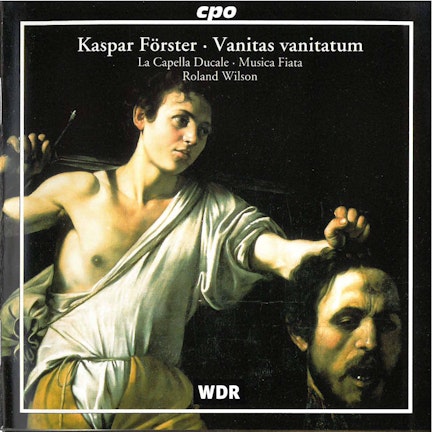
Förster: Vanitas vanitatum
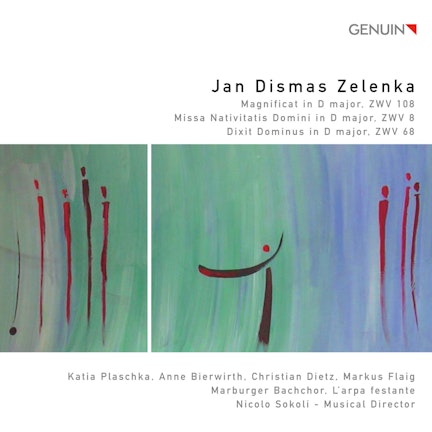
Zelenka: Magnificat - Missa Nativitatis Domini - Dixit Dominus
Es ist ein Ros
Corelli & Quentin: Flute Sonatas
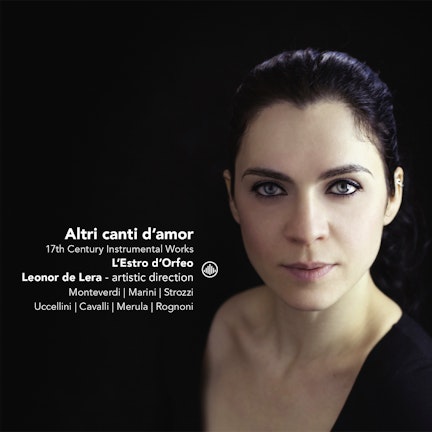
Altri canti d'amor
Pergolesi, Vinci & Leo: Concerti per traversiere
Baroque Trumpet (The Art Of The), Vol. 2
Buffardin: Sonates & Concerto
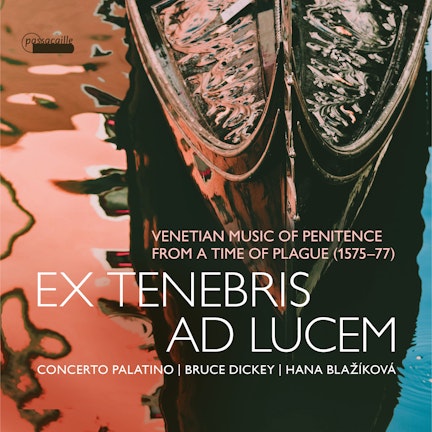
Ex tenebris ad lucem: Venetian Music of Penitence from a Time of Plague, 1575-1577
Bach: Erbarme dich
Music from the Peterhouse Partbooks, Vol. 3
Boismortier: The Court and the Village, Chamber Music