Corelli's 12 Violin Sonatas Op. 5, published in 1700, were so successful they were republished over 42 times across Europe by 1800 and arranged for many instruments.
Historical Context
The early 18th century marked the nascent stages of the Baroque transverse flute, initially used sporadically in operas before composers began dedicating sonatas and concertos to it.
Performer Biography
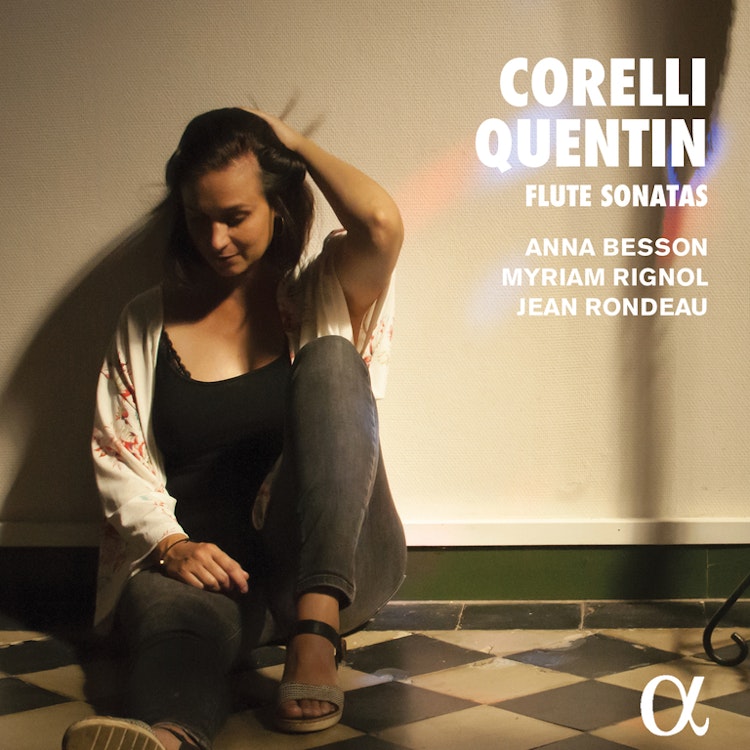
Jean Rondeau, the harpsichordist on this album, was described by the Washington Post as 'one of the most natural performers one is likely to hear on a classical music stage these days'.
Interpretation
Anna Besson, the flutist on this album, drew inspiration from Corelli's attributed ornaments published in a 1710 Amsterdam edition, agreeing with Quantz's view on appropriate ornamentation styles.
Instruments
The Baroque flute (traverso) had a gentle sonority that initially limited it to simpler writing, far from the virtuosity of other instruments.
Compositional Technique
When Corelli's violin sonatas were adapted for the flute, practical problems arose, such as the need to change keys for comfort and to avoid 'fork fingerings' that produced an uneven sound.
Critical Reception
Michel Corrette, a composer, violinist, and writer, stated in 1757 that music made astonishing progress across Europe thanks to Corelli's invention of the sonata and concerto genres.
You might also enjoy...
Buffardin: Sonates & Concerto
Philidor: Suites for Flute and B. C.
Hotteterre / Leclair: Recorder Suites
C.P.E. Bach: Flute Sonatas
C. P. E. Bach: Sonatas for Flute and Fortepiano
Sammartini & Handel: Sonatas for a German Flute
Telemann, G.P.: Essercizii Musici - Solos and Nos. 1-6
Telemann: Trios & Quartets with Transverse Flute and Viola da gamba
Boismortier / Schickhardt / Telemann: Recorder Music