Mendelssohn's Symphony No. 5, the "Reformation" Symphony, was originally titled "Symphony for the Celebration of the Church Revolution" and was intended for the 300th anniversary of the "Confessio Augustana" (Augsburg Confession) in 1830.
Composition History
Felix Mendelssohn Bartholdy conceived the idea for his Symphony No. 3, the "Scottish" Symphony, after visiting Holyrood Palace in Edinburgh in 1829, where he felt he found the beginning of the work.
Compositional Technique
The "Reformation" Symphony incorporates the "Dresden Amen," a liturgical clause from the Dresden court church, and Martin Luther's chorale "Ein feste Burg ist unser Gott" (A Mighty Fortress Is Our God).
Composition History
Although Mendelssohn's Symphony No. 3 is numbered as such, it was completed in 1842, after he had already composed his Symphony No. 4 ("Italian") and Symphony No. 5 ("Reformation").
Performer Biography
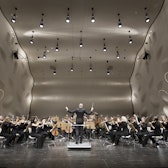
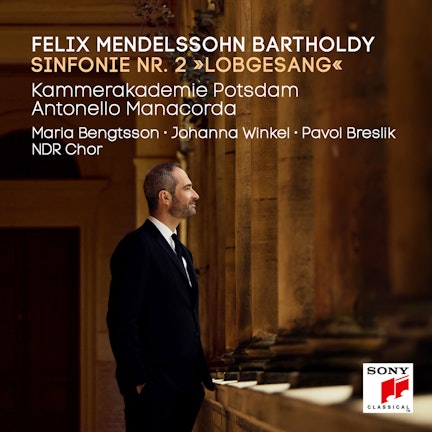
The Kammerakademie Potsdam, founded in 2001, was awarded the ECHO Klassik as "Orchestra of the Year 2015" for their recording of Franz Schubert's Symphonies Nos. 2 & 4.
Critical Reception
The "Reformation" Symphony was only performed once during Mendelssohn's lifetime, on November 15, 1832, and he considered it one of the few failures of his career.
Instruments
This recording uses valve trumpets and also flap trumpets, which were relatively new during Mendelssohn's time, to better align with the Kammerakademie Potsdam's sound ideal.